Vietnam in 10 Days: How We Funded Our Hotels With Flight Points and Ate Through 10 Michelin Restaurants
I went into Vietnam expecting to check a box. Ha Long Bay, a bowl of pho, some lanterns in Hoi An. Come back with nice photos and move on. But ten days in, three people and more food than we had any right to eat, I was already looking at return flights. This is the honest account of how we did it, what worked, what didn't, and what I'd tell anyone planning the same trip.
Before You Even Pack: Sort the Visa
Indians need a Vietnam e-visa. It's online, costs around $25, and under normal conditions processes in about three business days. We applied just before Lunar New Year and it took nearly a week. The lesson: if there's any Vietnamese public holiday near your travel dates, apply at least two weeks out. Don't leave it for the last minute assuming it'll be quick, because during holidays it absolutely won't be.
The Part Everyone Asks About: Hotels on Points
We booked our flights through Traveledge, the Axis Bank travel portal. The reason was simple: the Axis Magnus Burgundy card gives 5x reward points on Traveledge bookings, and our flights for three people from Hyderabad came to around ₹90,000. That single booking generated enough points to cover two Accor hotel stays after transferring to Accor ALL at a 5:4 ratio.
What those points paid for: three nights at Mercure Hanoi La Gare in the heart of the city, and one night at Novotel Ho Chi Minh City Centre in Saigon. Both properties would have eaten up a meaningful chunk of the trip budget if we'd paid cash. I should be upfront: Accor has since been removed from Axis Bank's transfer partners, so this exact route is no longer available. But the thinking behind it still holds. If you have a card with elevated earn on a travel portal and a transfer partner you actually use, front-load your spend there before any devaluation hits.
The one hotel we paid cash for was Mercure French Village at Ba Na Hills. More on that later. It was worth every rupee.
Hanoi: Three Days, Eat Everything
Hanoi hit differently than I expected. The old quarter is genuinely old: narrow four-storey tube houses packed wall to wall, motorbikes going in every possible direction, and food appearing out of doorways you'd never think to walk through. Three days felt right.
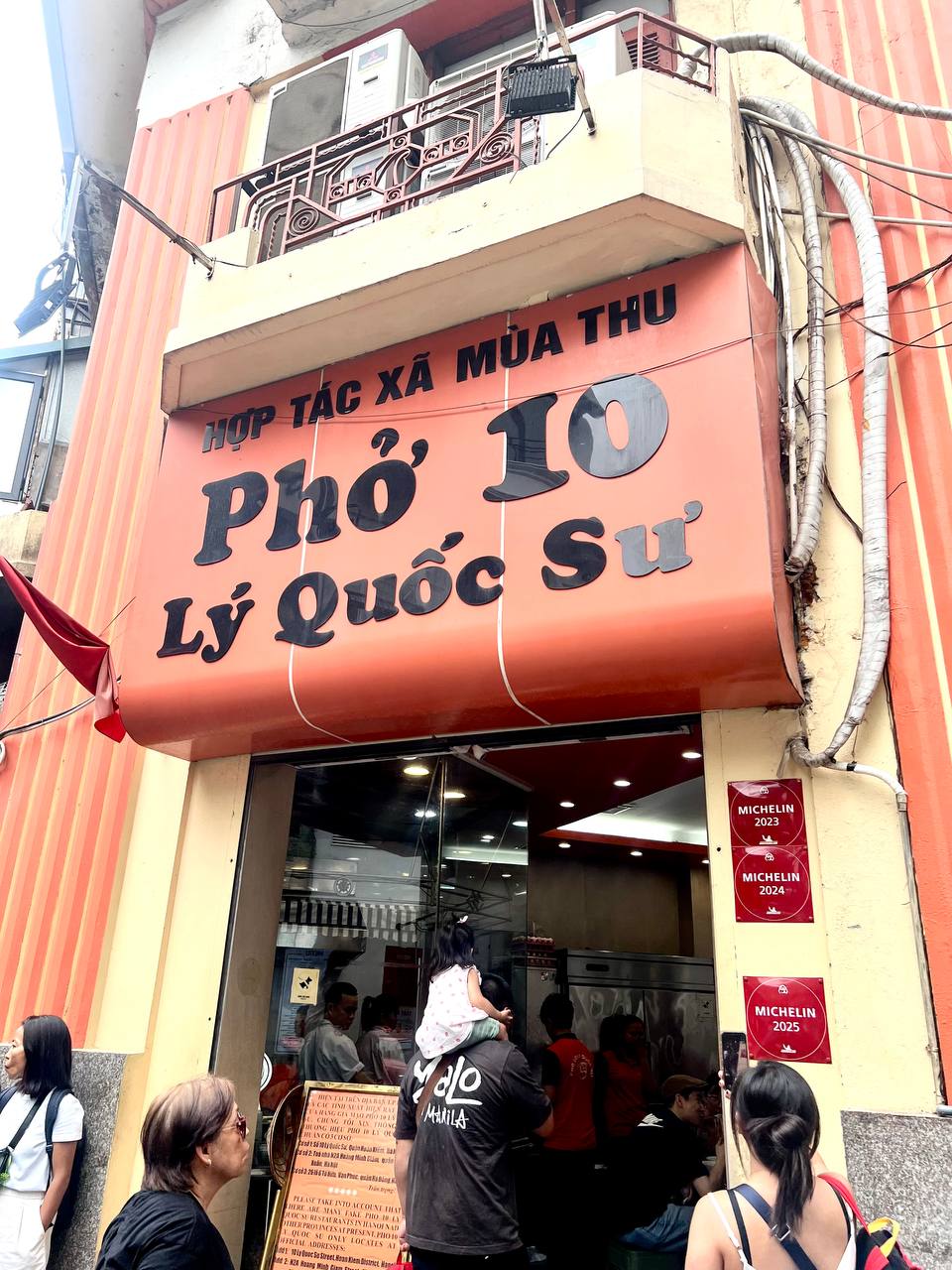
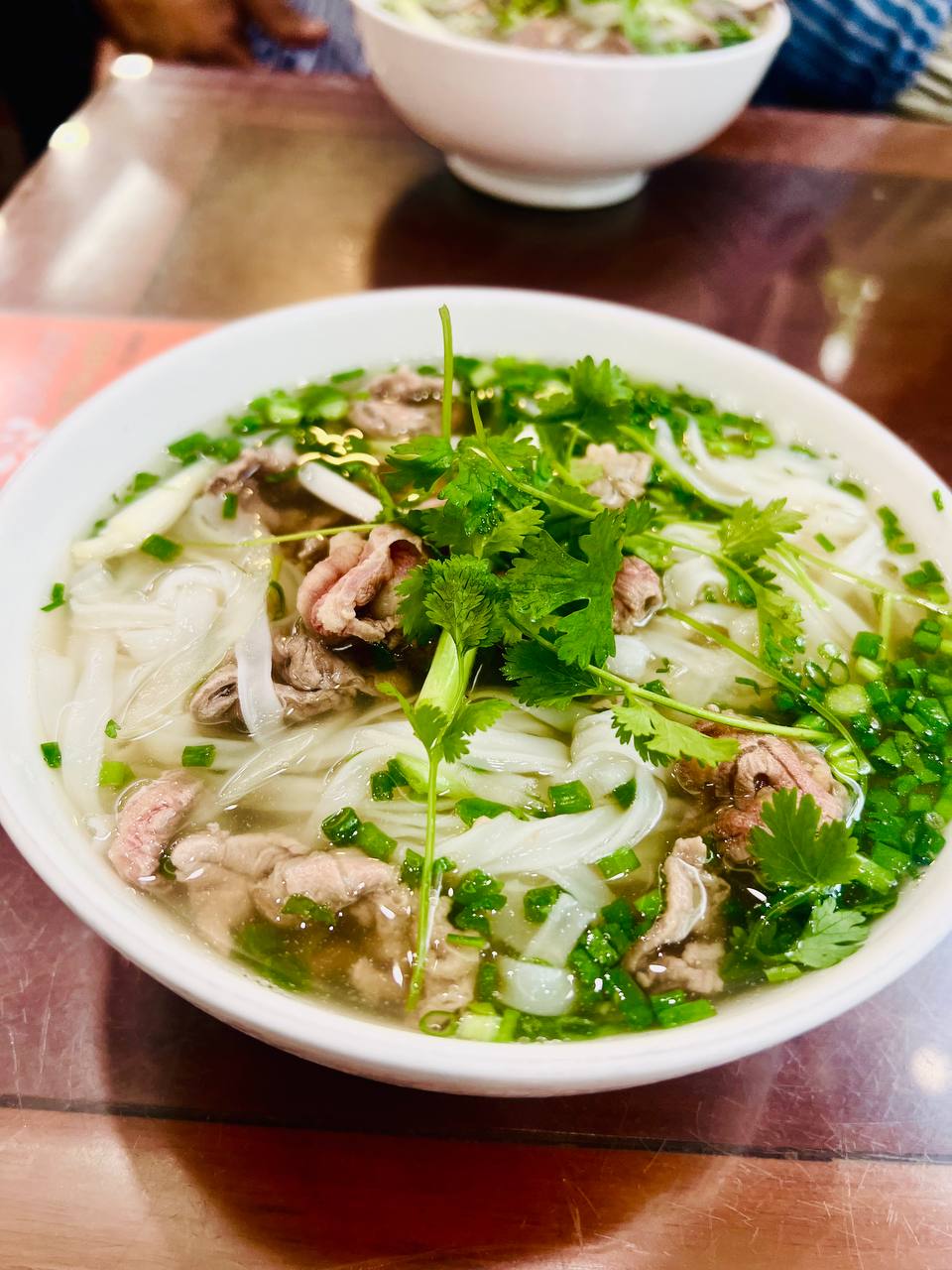
We started, as everyone must, with pho. Pho 10 Ly Quoc Su has three consecutive Michelin Bib Gourmand plates on the wall (2023, 2024, 2025) and a queue that starts before 7am. The broth is clean and precise, not aggressively spiced, just the result of ten-plus hours of bone. The beef slices are thin enough that the hot broth cooks them on contact. Pho is everywhere in Vietnam but this is the version that makes you understand what the fuss is about. Don't skip it, don't go at lunchtime.
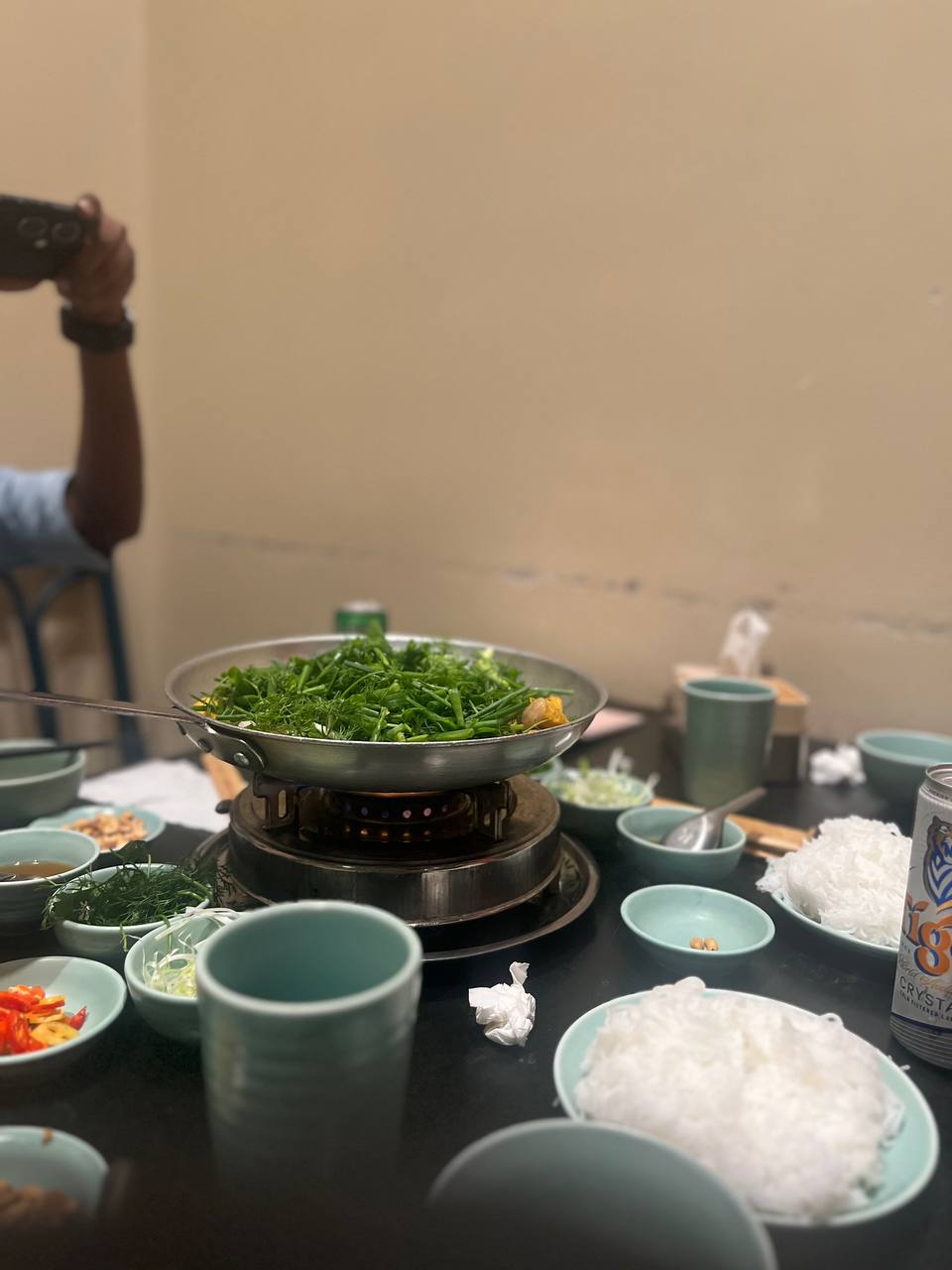
Cha Ca Thang Long was the meal that surprised me most. A cast iron pan of turmeric-marinated fish arrives still sizzling, half-buried under a pile of dill and spring onions. You toss everything yourself, wrap it in rice paper or drop it into noodles, and eat with fermented shrimp paste. It sounds like a lot going on, and it is. It works completely. The dish is Hanoi-specific. You can't really get it elsewhere, and Thang Long has been doing it for decades. Another Michelin Bib Gourmand, earned.
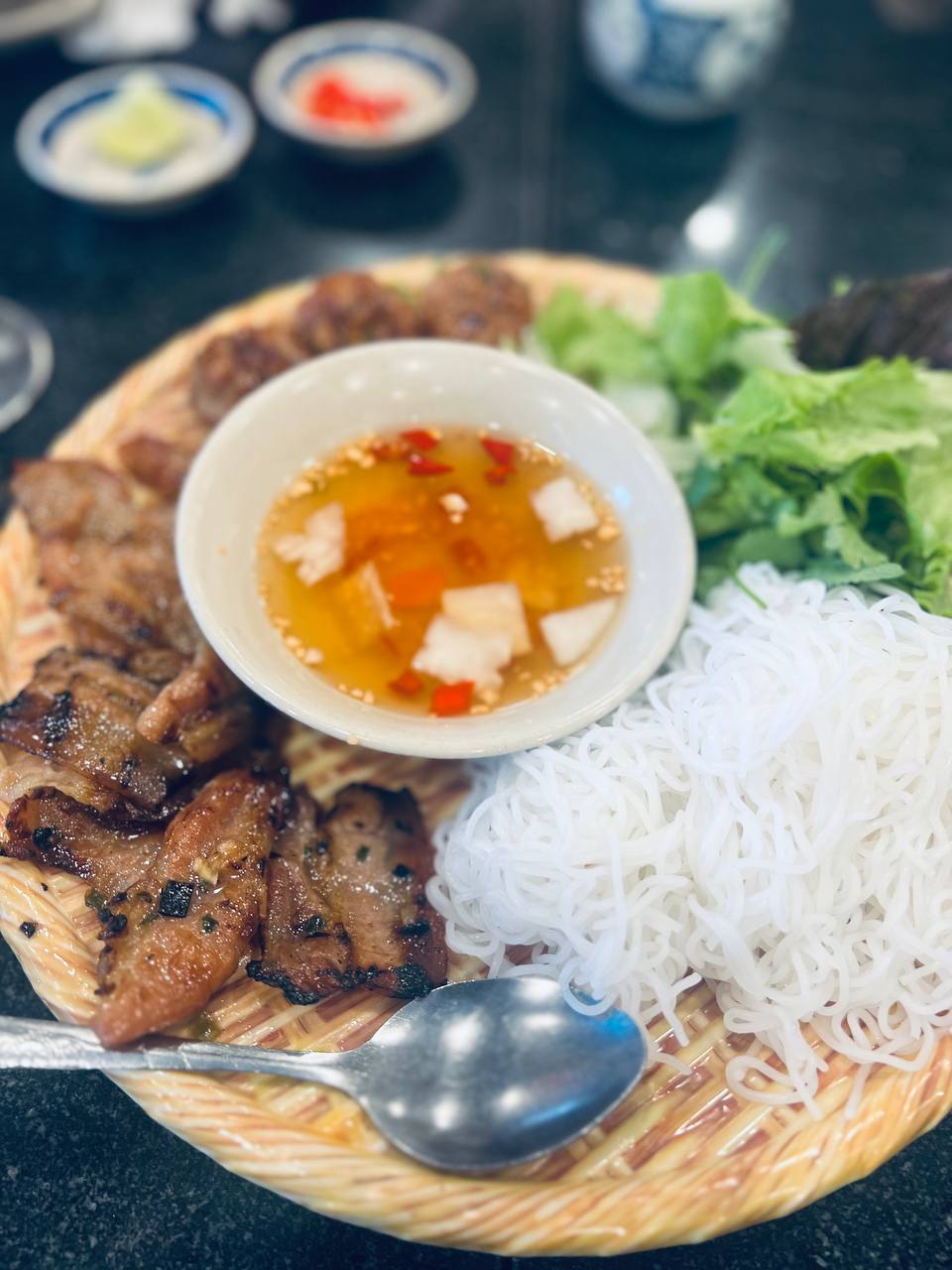
Bún chả is the grilled pork dish you eat at lunch. Fatty patties in a light sweet broth, rice noodles on the side, herbs to add yourself. Every local spot does a version and most of them are good. Just follow the smoke.
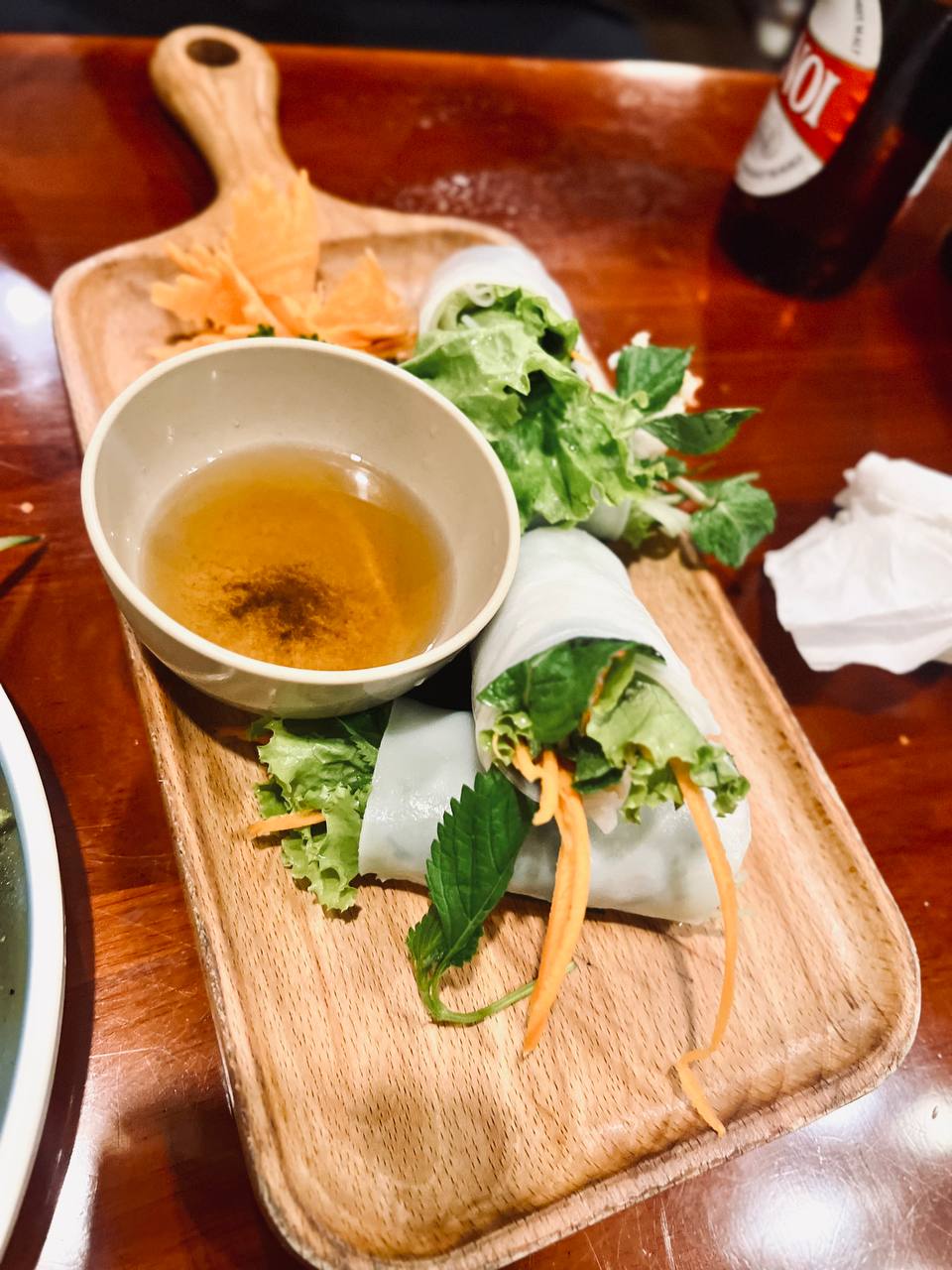
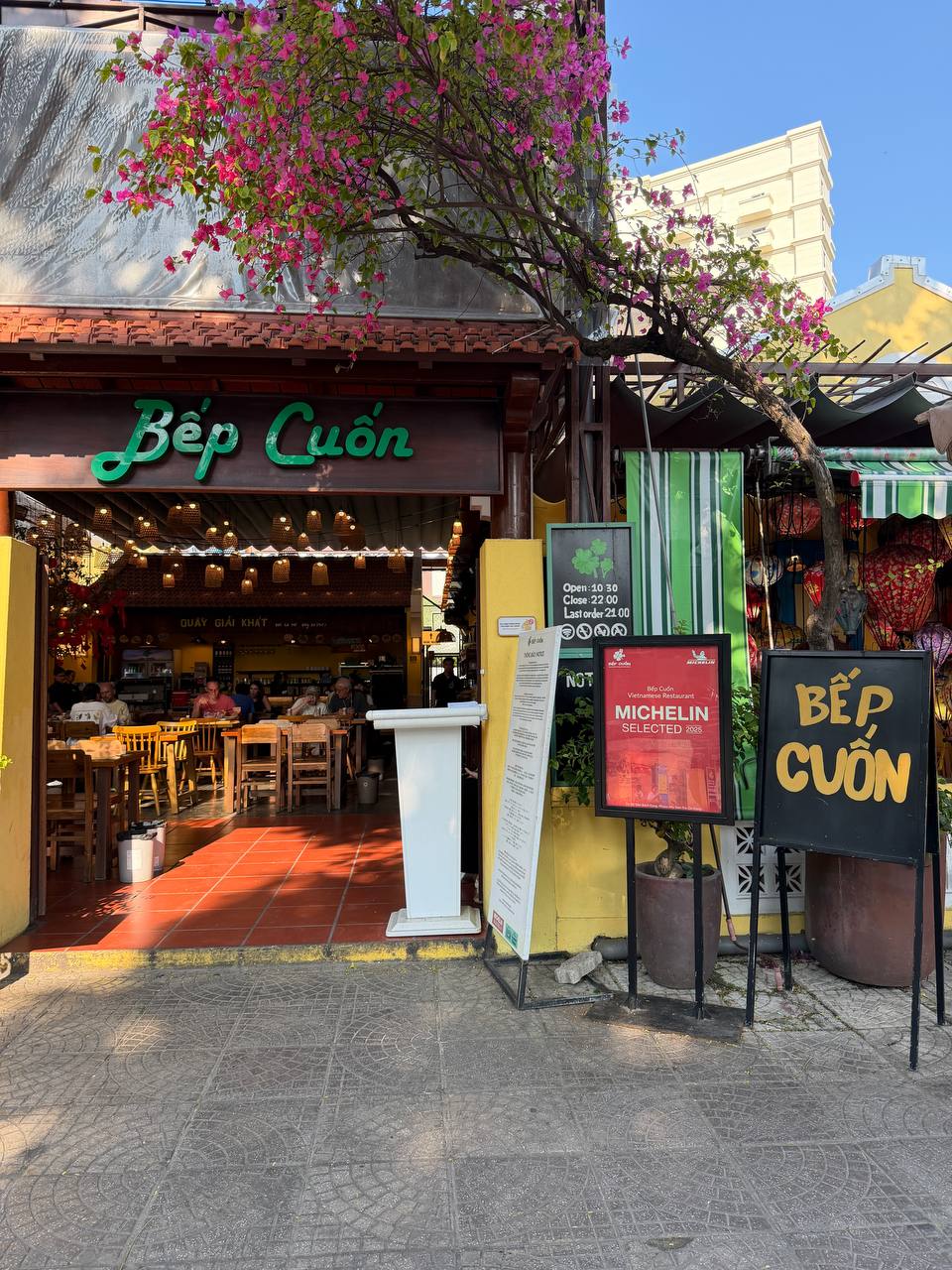
Bep Cuon is on the Michelin list and the rice paper rolls earn it. Each roll is assembled to order: thin rice paper, fresh herbs packed inside, light and precise in a way that makes you realise how often the dish is treated as an afterthought elsewhere. The rolls arrive alongside dipping sauces that are built to balance rather than overpower. It's a quiet restaurant in the old quarter and the food is exactly what it promises to be.
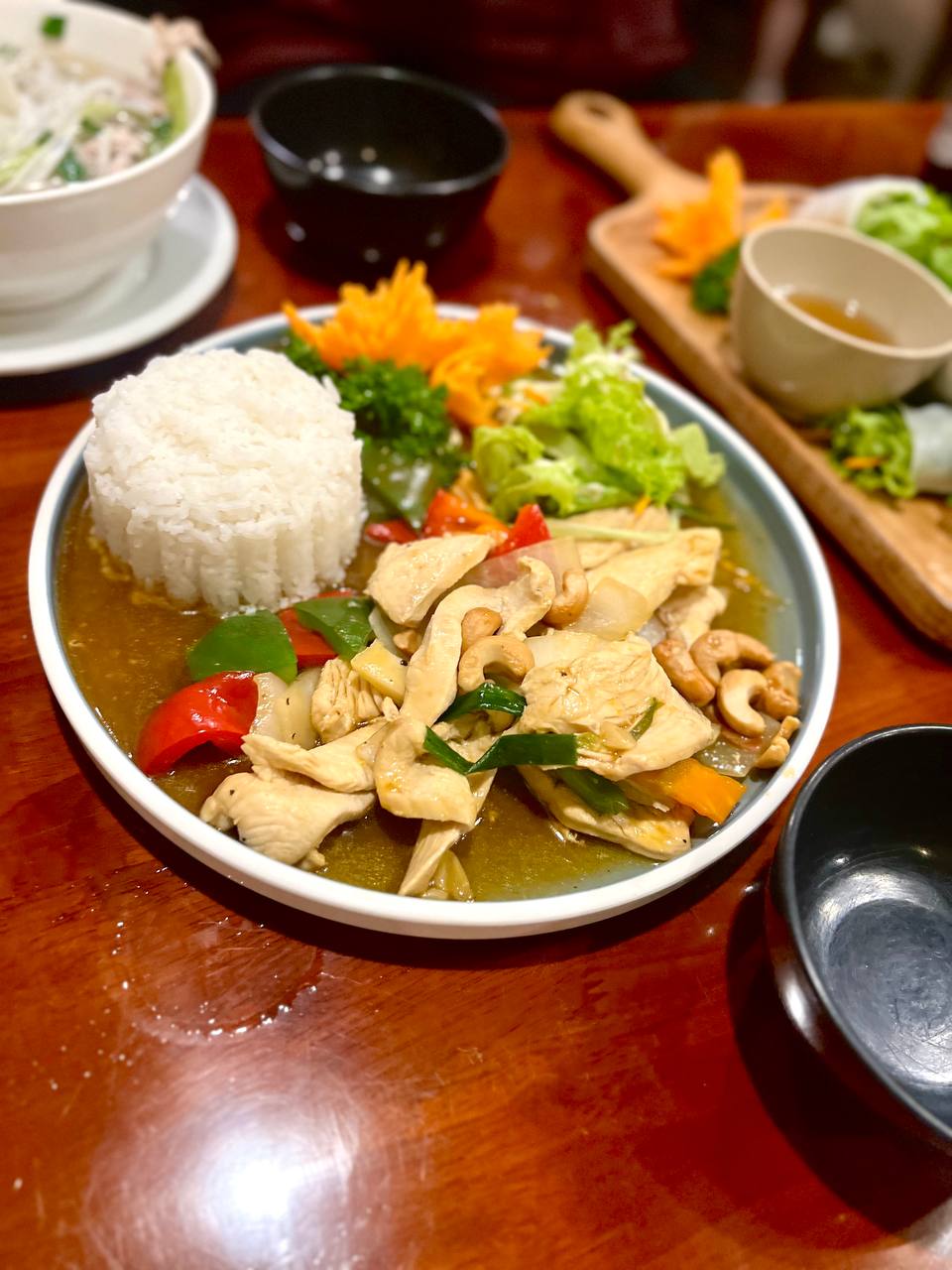
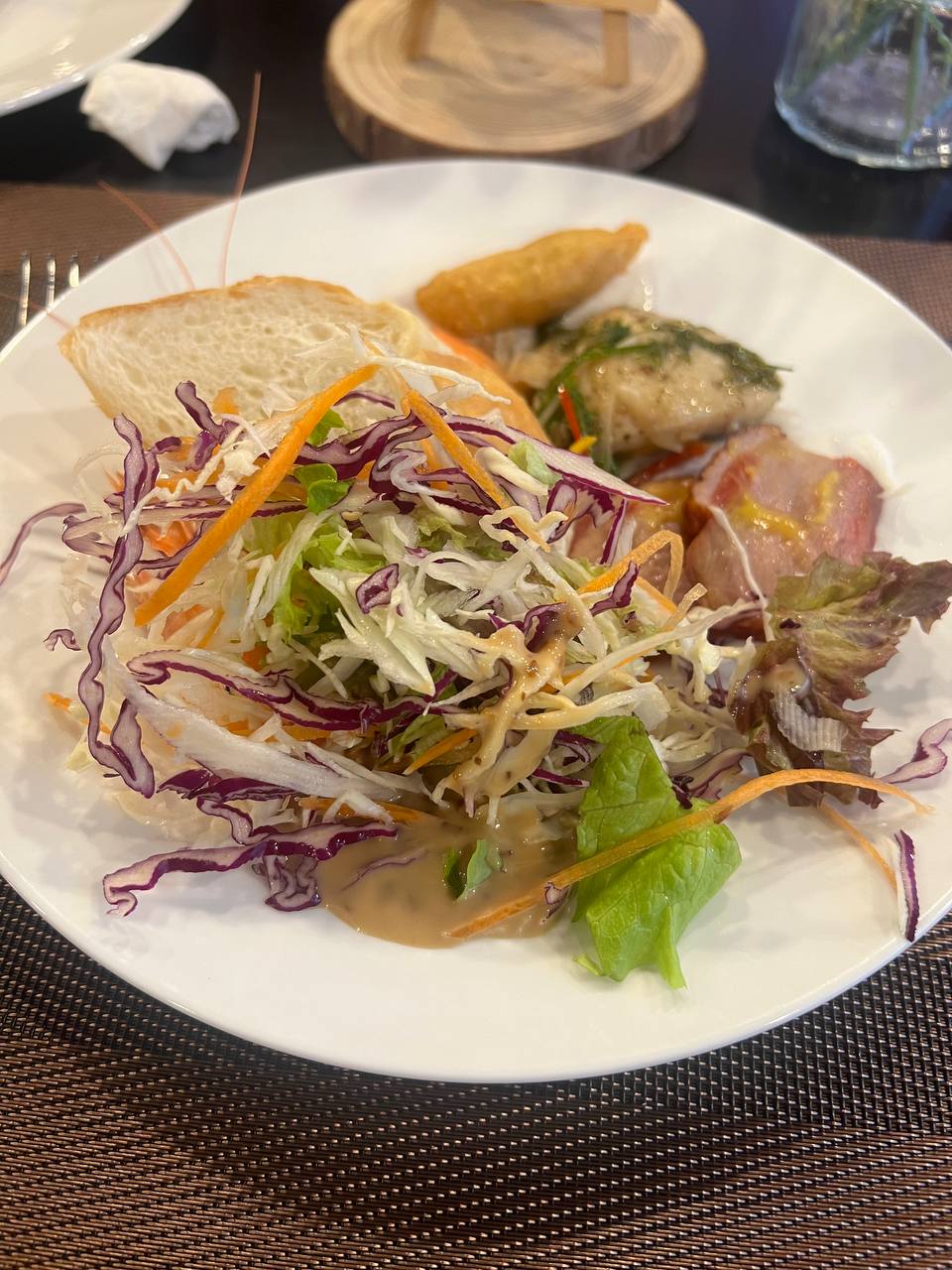
We also had a chicken cashew stir fry that I can't fully attribute to a specific restaurant but was one of the better versions of the dish I've had anywhere.
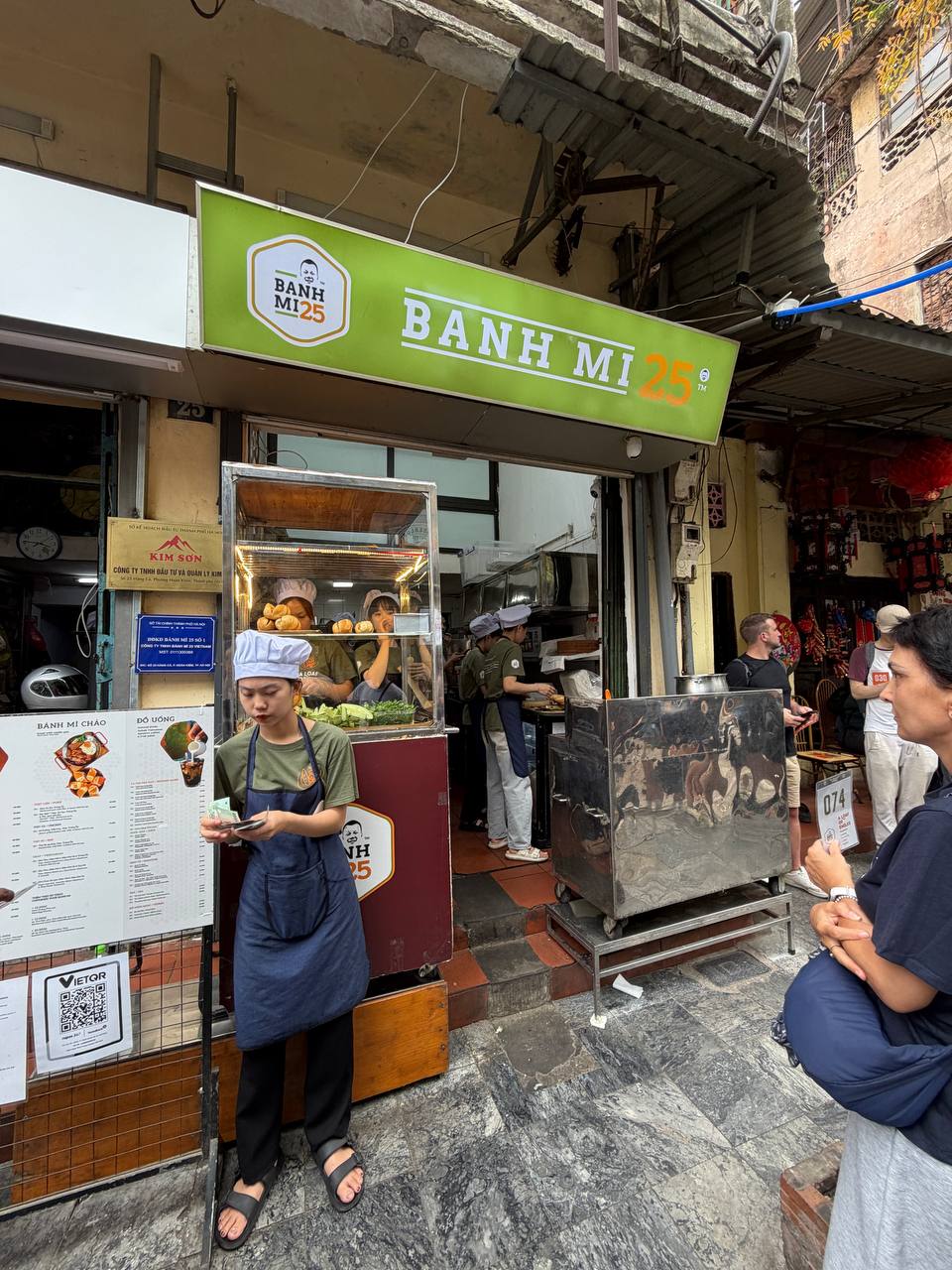
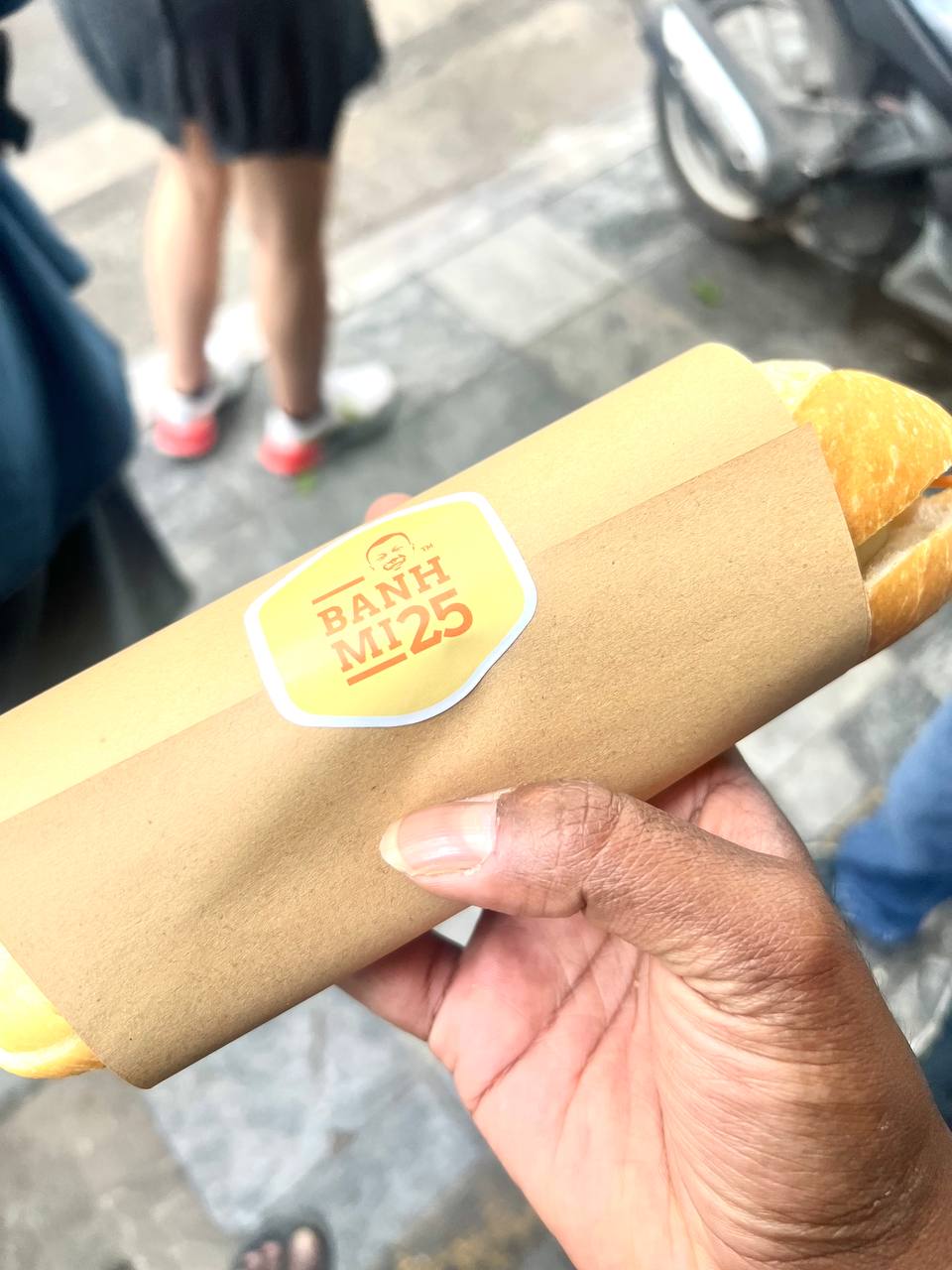
Banh Mi 25 is a small shop in the old quarter. The banh mi is exactly as good as advertised: baguette with the right amount of crunch, pâté, pickled vegetables, chilli. Get one for breakfast, eat it walking.
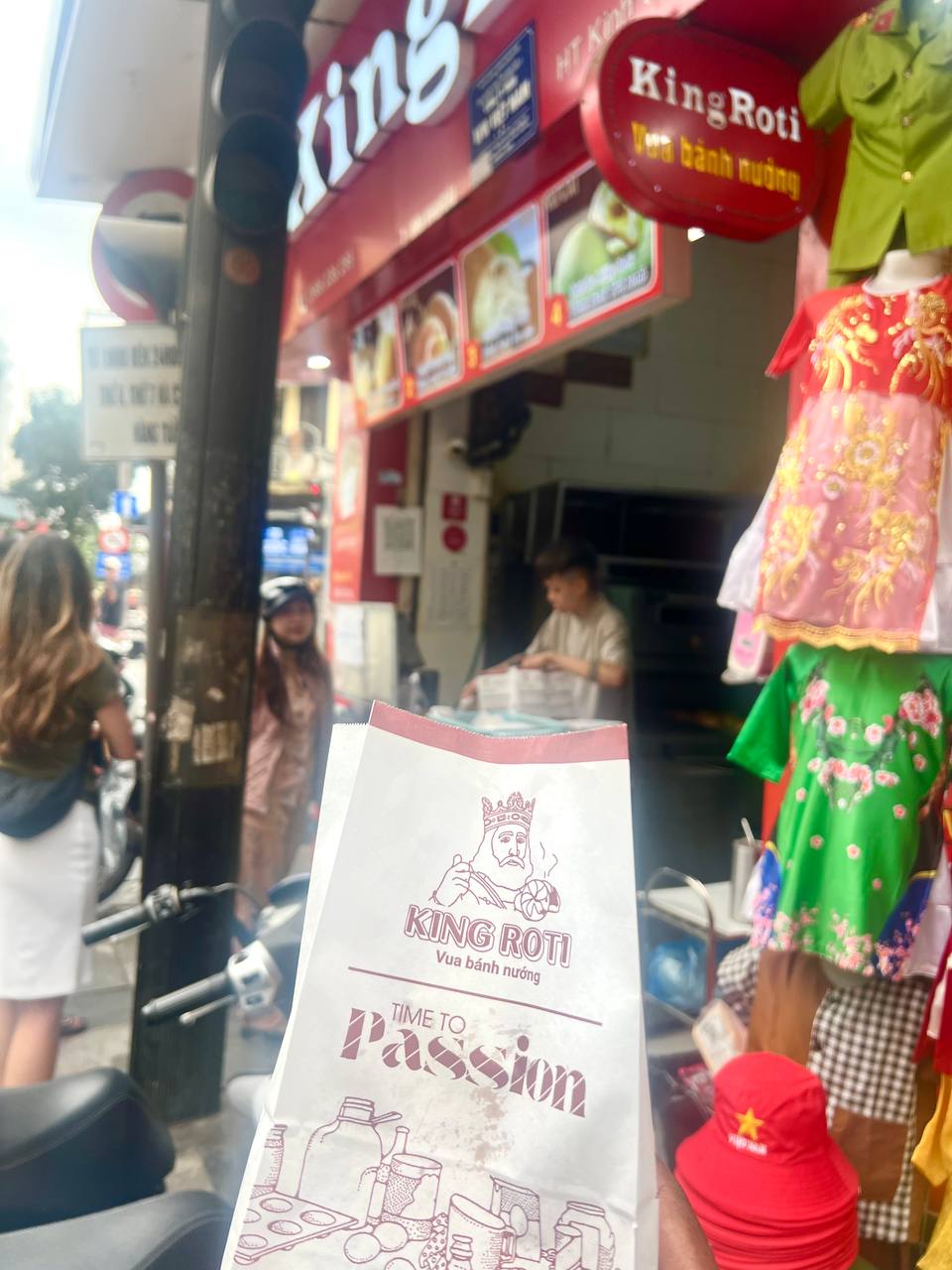
King Roti is one of those places you stumble into and remember, a pastry shop in the old quarter that was doing a good enough queue to make us stop and try it.
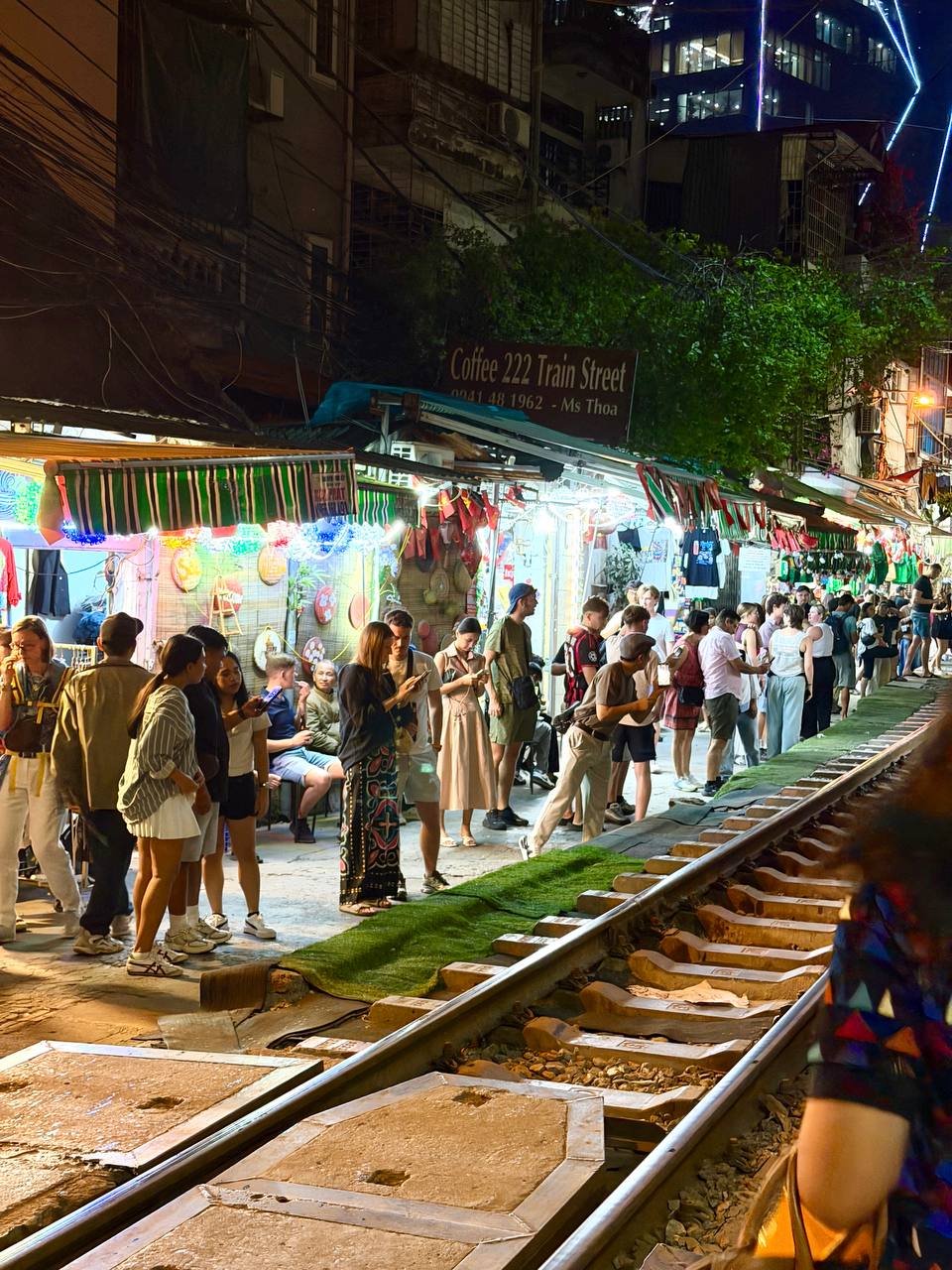
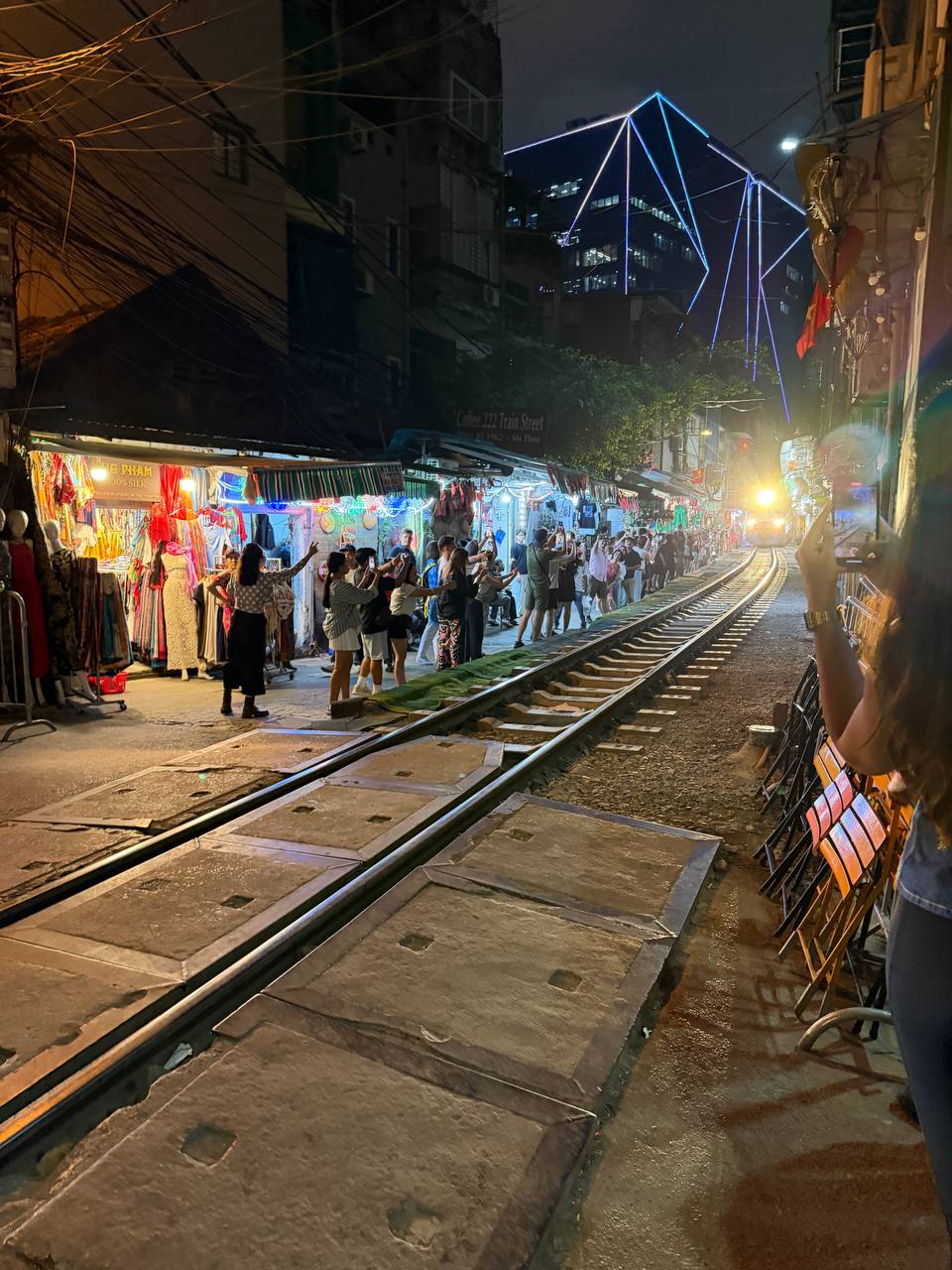
One evening we walked Train Street. Twice a day a real working train passes a few inches from the cafes and shops that line the track, close enough that people lean back against the walls. Coffee 222 Train Street is right on it. Go at night when it's lit up.
Lan Ha Bay: Not Ha Long
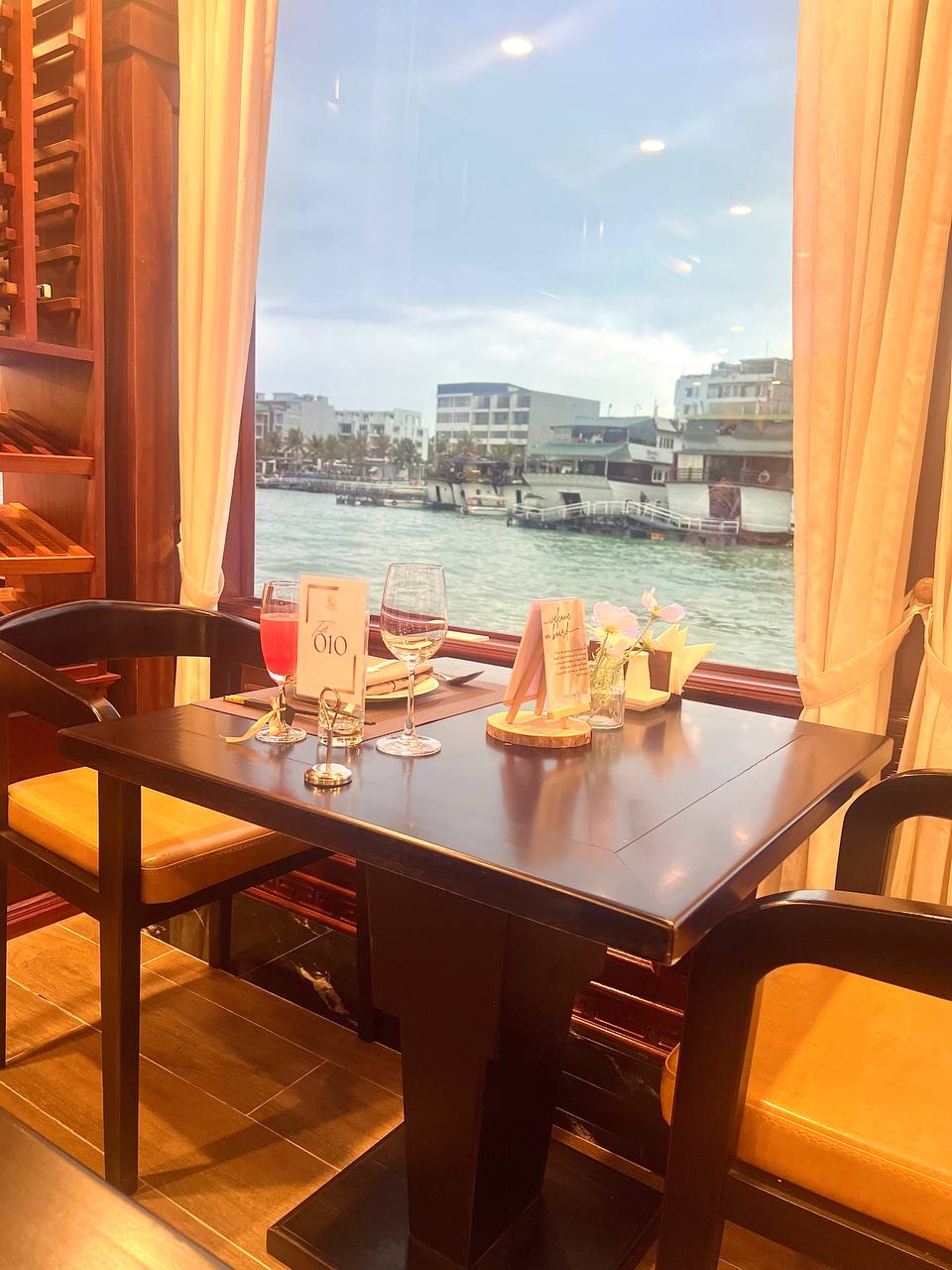
Ha Long Bay is famous. It's also extremely crowded. Lan Ha Bay is 30 minutes further and has the same limestone karst scenery with a fraction of the boats. We booked a day cruise through a local Hanoi travel agent, not via Klook, just a walk-in office in the old quarter, and the whole thing felt calm in a way that a tourist-heavy overnight cruise on Ha Long would not.
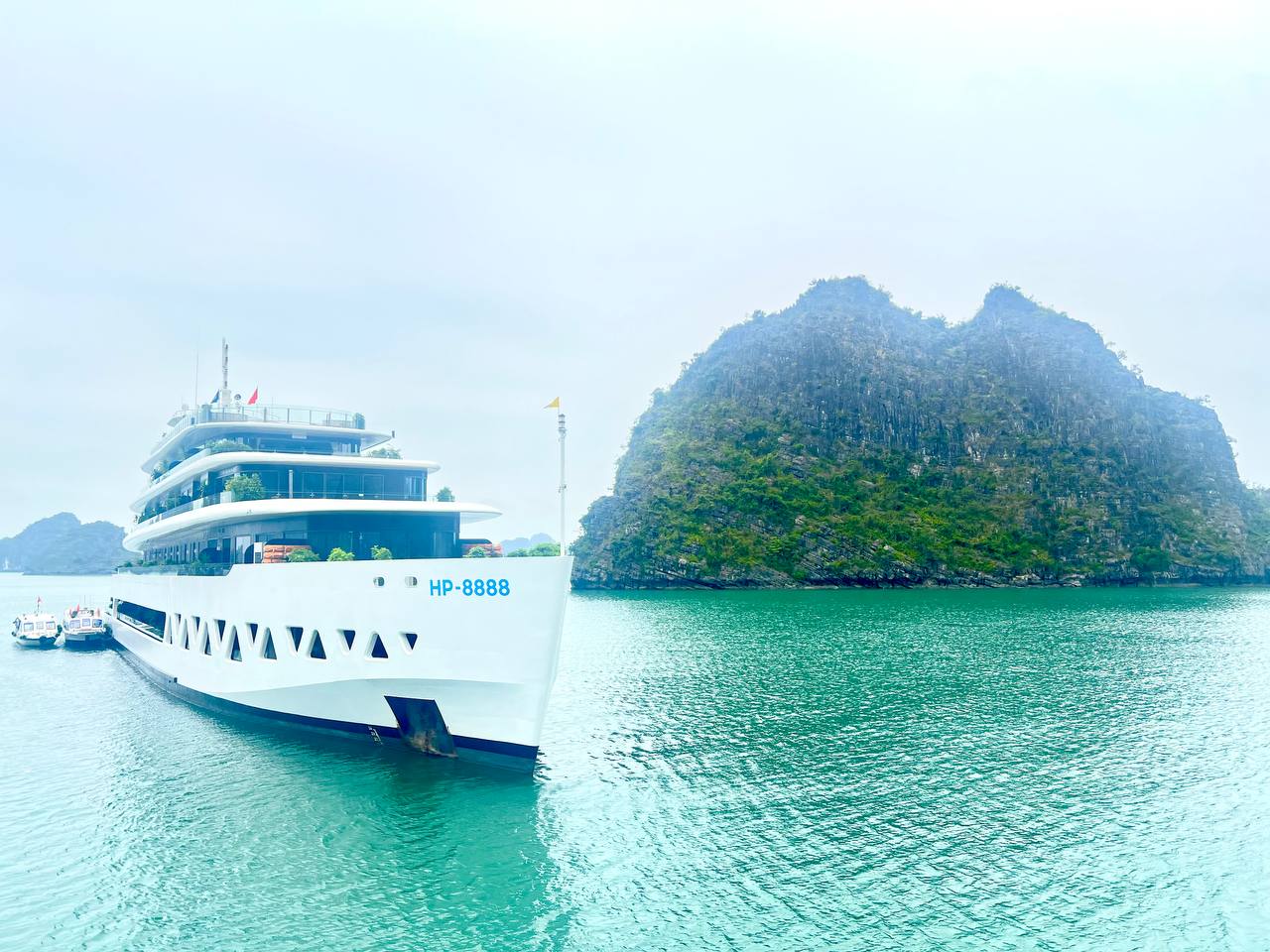
Lunch on board, caves, that impossible shade of green-blue water.
Ninh Binh: Ha Long Bay on Land
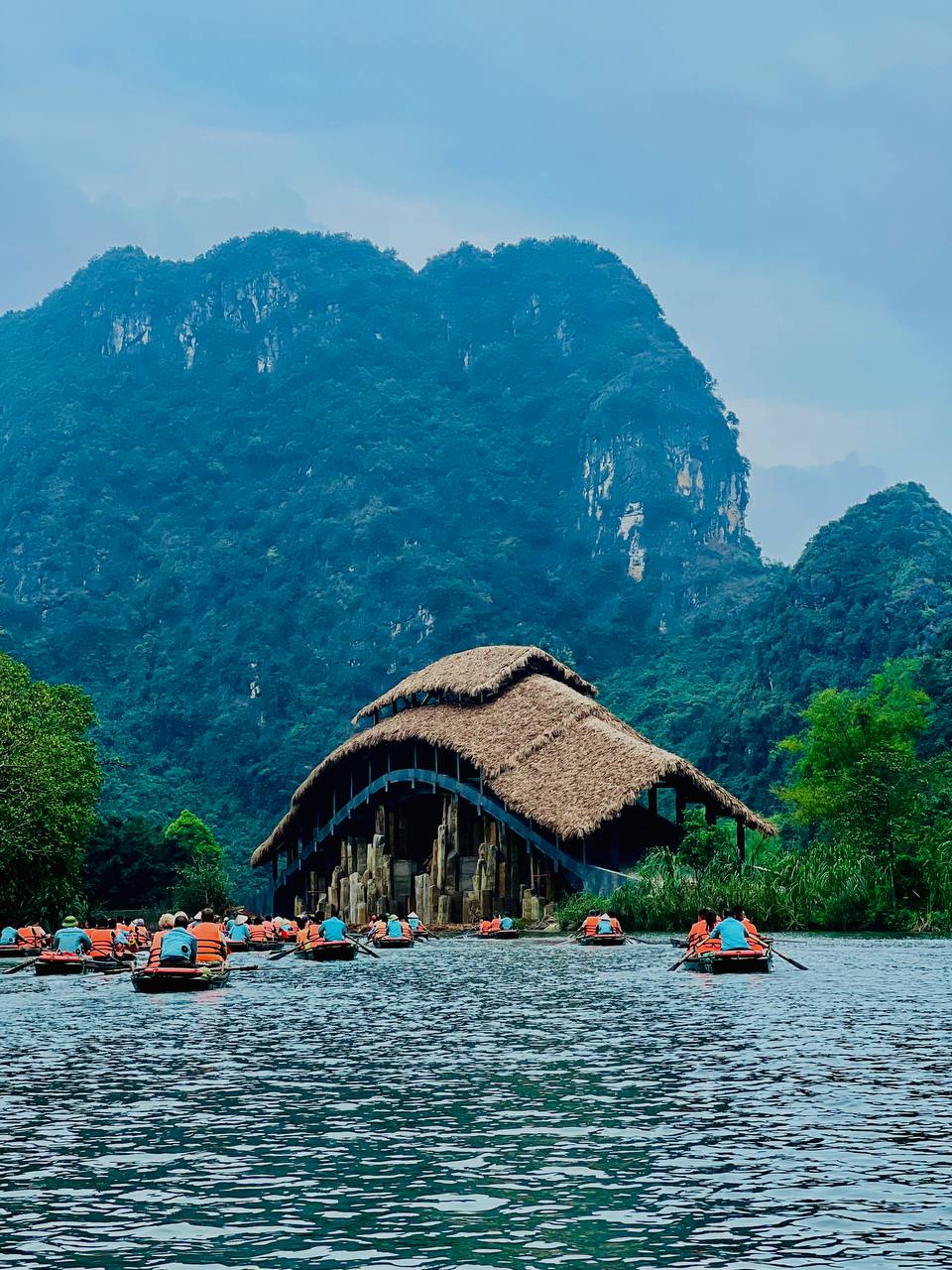
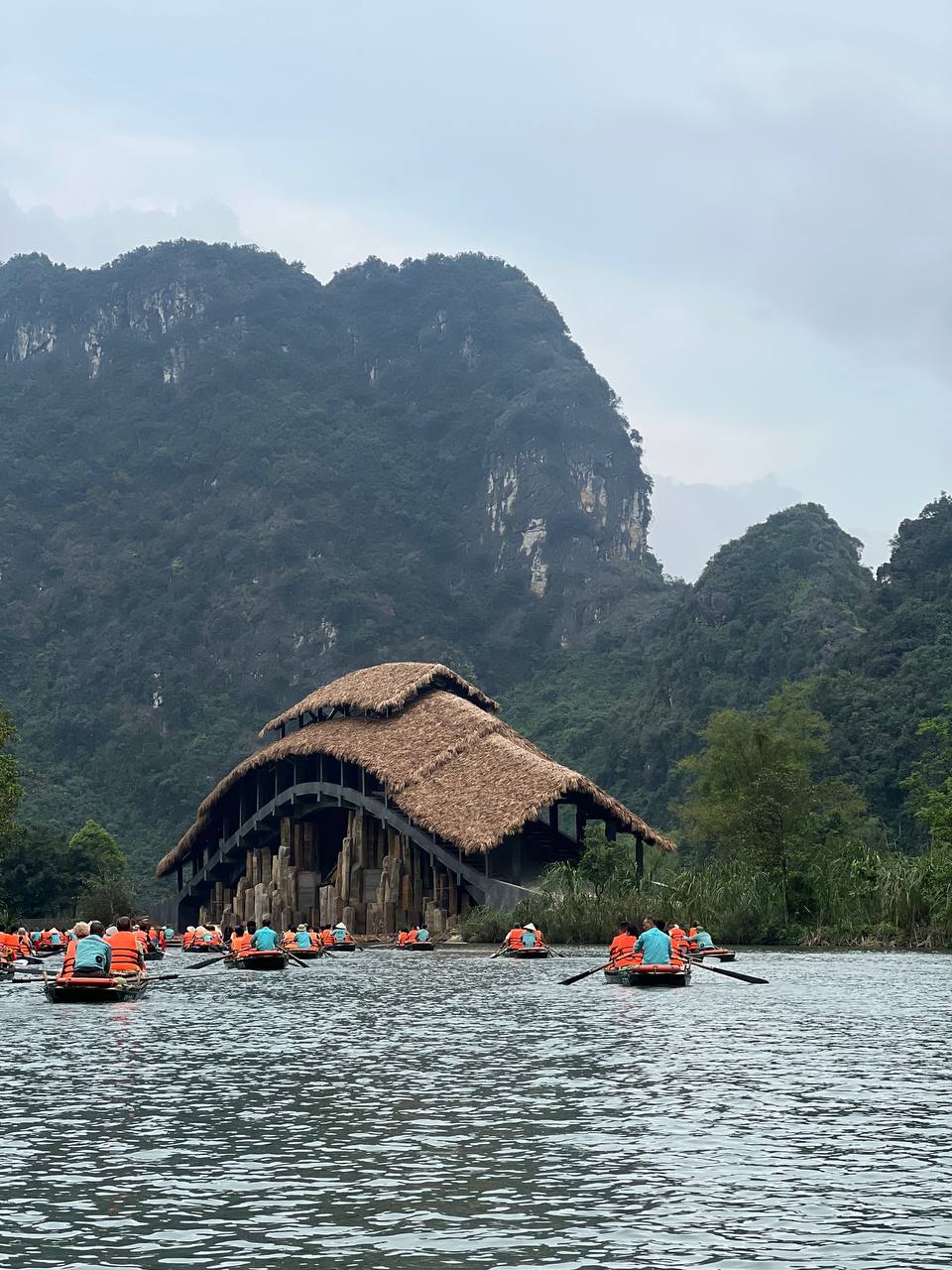
From Hanoi, Ninh Binh is two hours by road. We booked the Trang An boat tour through Klook. A rower takes you through a series of river caves while karst mountains rise straight up around you. There's a thatched pavilion mid-route where every boat seems to arrive at the same time, creating this strange moment of dozens of orange life-jacket-clad tourists drifting together in silence under a pagoda.
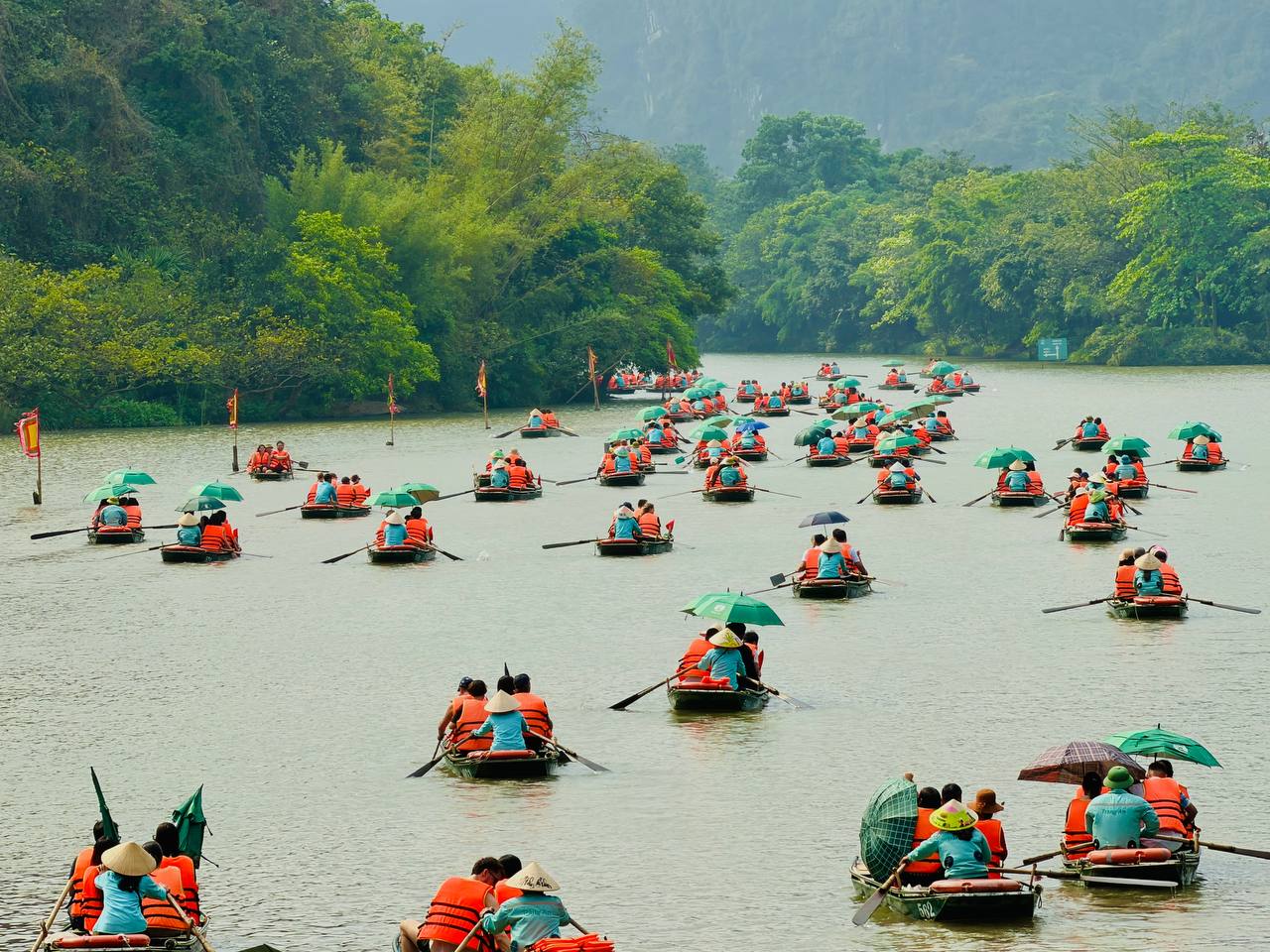
Worth the day trip.
Da Nang, Ba Na Hills, and the Airport Trick
Da Nang is the base for two of the best days of the trip. We didn't spend much time in the city itself; we used it as the staging point for Ba Na Hills and Hoi An.
Before we get to those: when we were flying Da Nang to Ho Chi Minh City on VietJet, the departure queue was enormous. Hundreds of people, heat, no clear end in sight. We paid 100,000 Vietnamese dong per person (roughly ₹340) for the priority lane. We were through check-in and security in under 20 minutes while the regular queue hadn't moved noticeably. It's the cheapest good decision we made on the whole trip.
Ba Na Hills is a hill station that was built to look like a French village, and it succeeds in a way that's either charming or absurd depending on your mood, possibly both. The Golden Bridge, a walkway held up by two enormous stone hands, is exactly what you've seen in photos, and seeing it in person is still worth it. The cable car up is one of the longest in the world. The clouds roll through at that altitude and on the right day the bridge disappears into them.
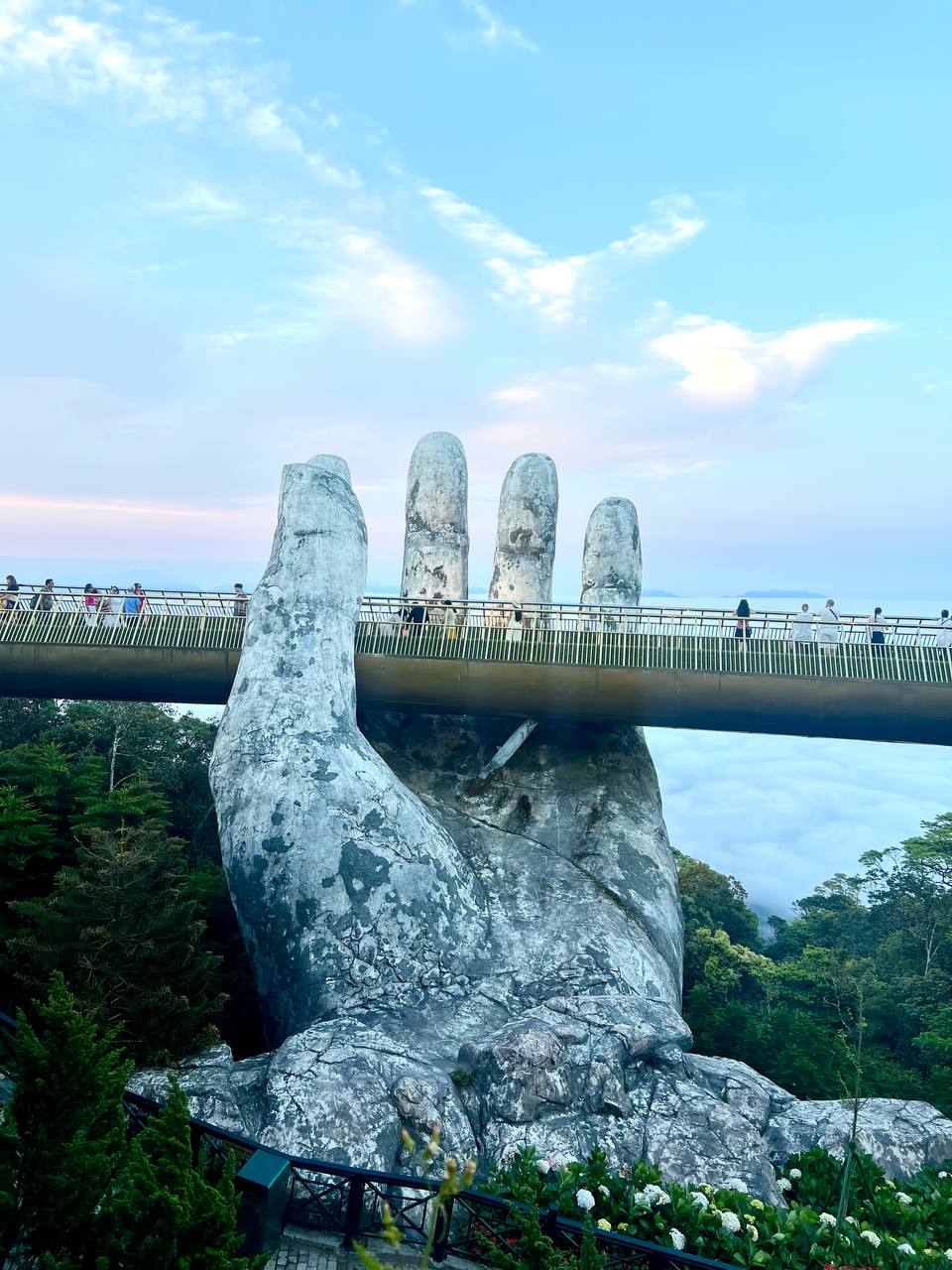
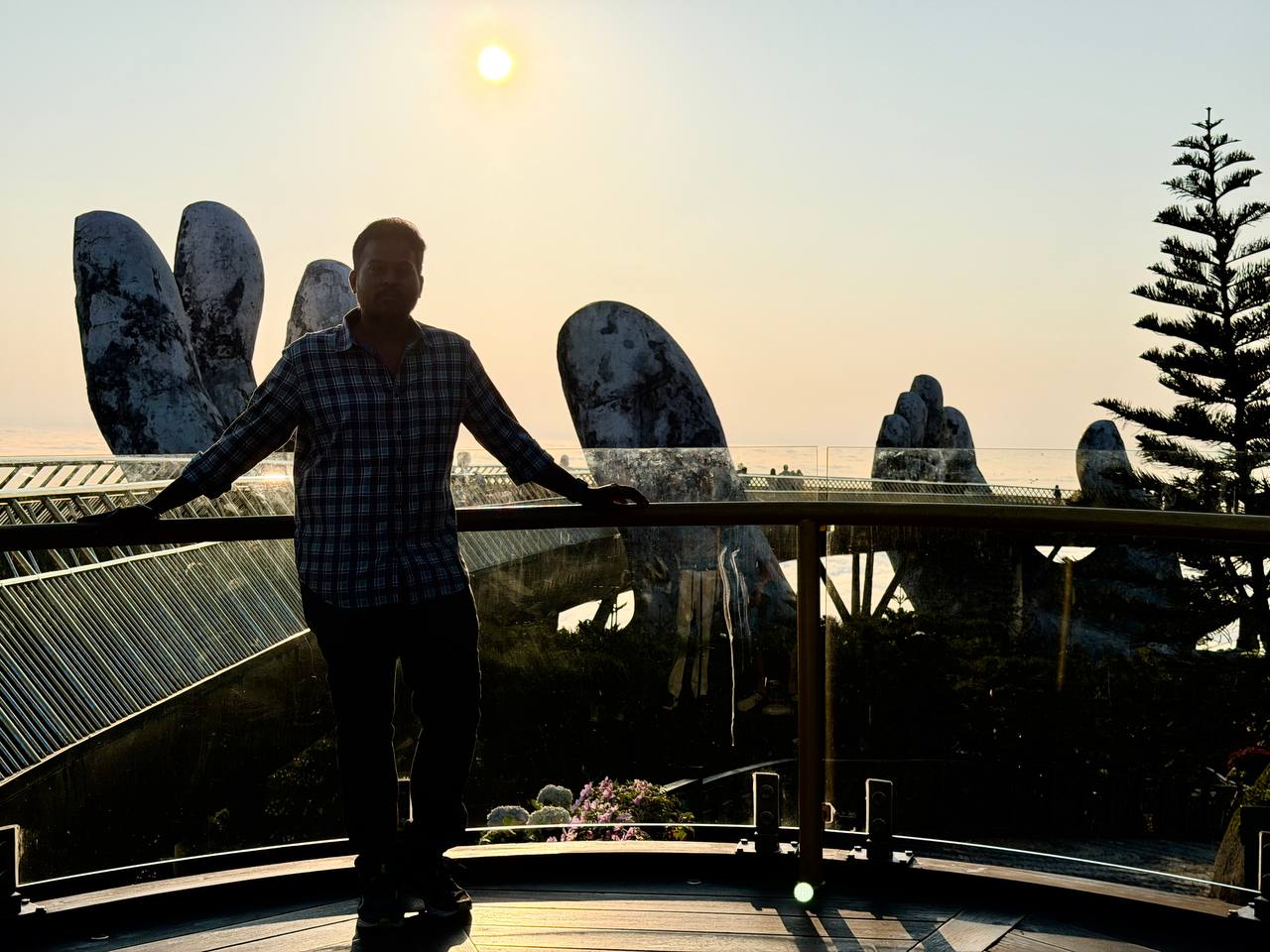
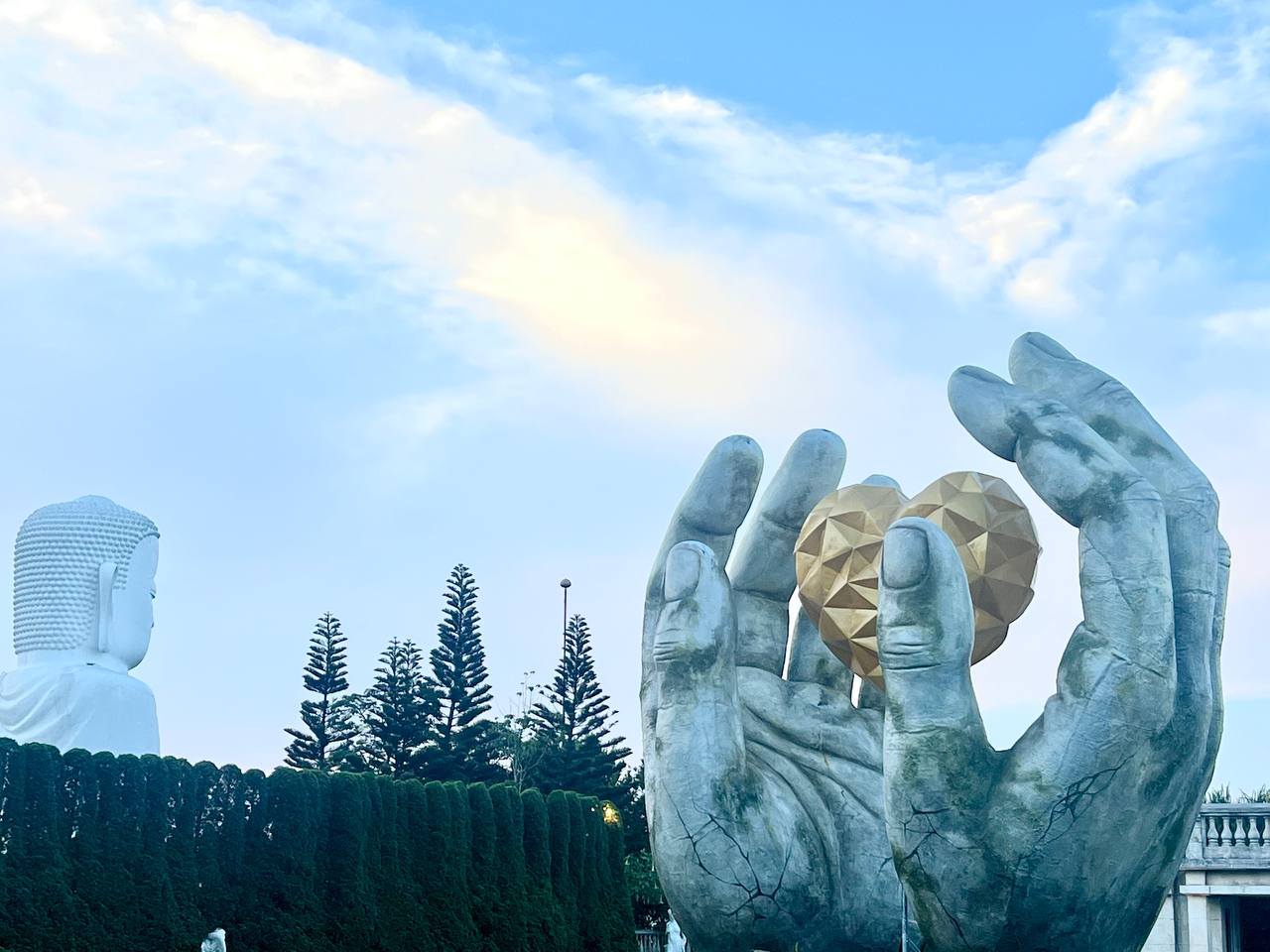
We stayed at the Mercure French Village, which is inside the resort. This matters more than it sounds. After 5pm, the day-trippers go home and the place empties out. We walked cobblestone streets with gas lamps, no crowds, cold mountain air. It was a different experience entirely from the daytime chaos.
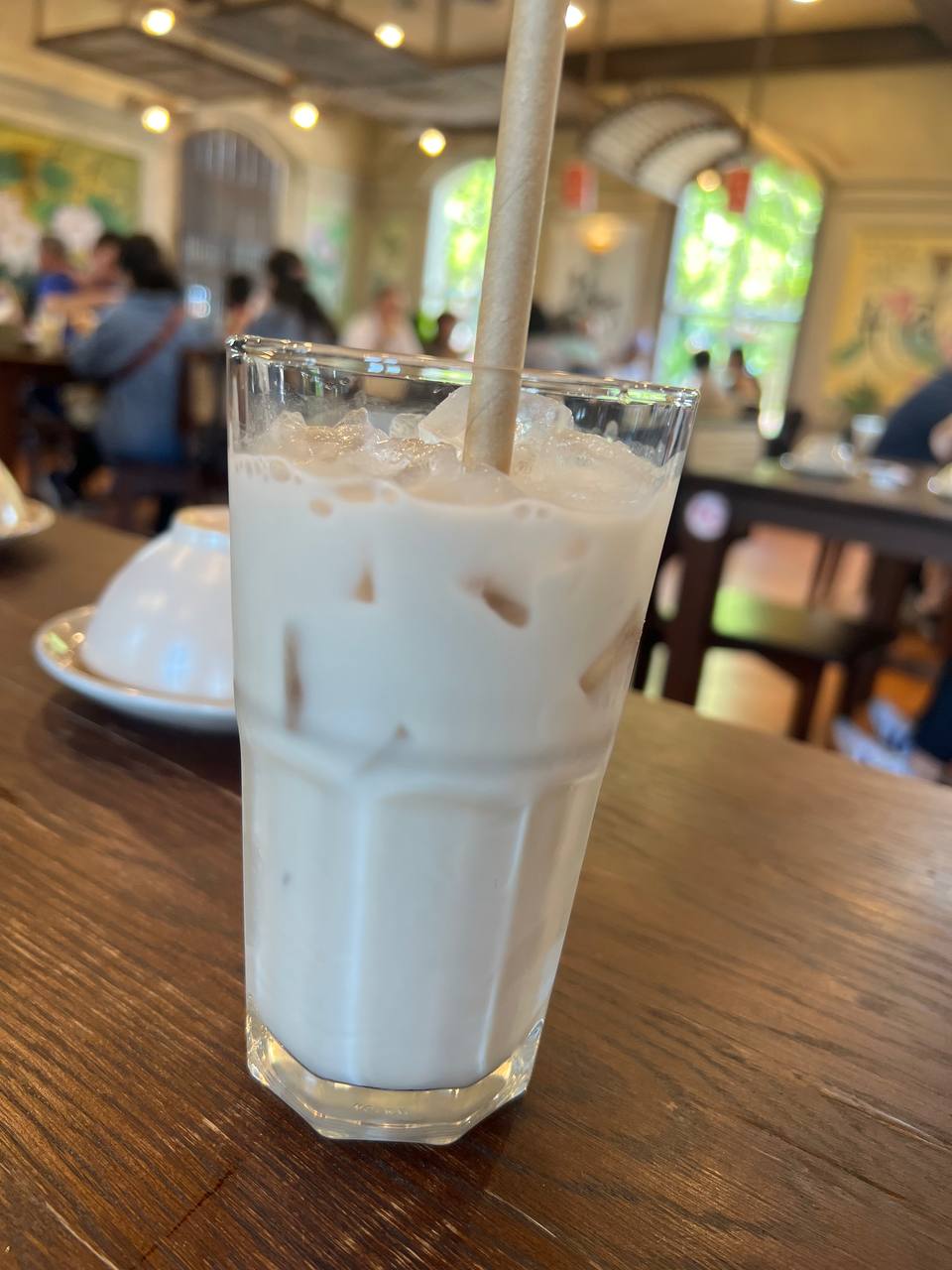
Ngoc Chi is a Michelin-selected restaurant inside Ba Na Hills, which sounds like a low bar but isn't. The iced coconut drink came after two hours of cable cars and walking and it was exactly what that moment needed. The food is Vietnamese, well executed, and the setting makes it feel like less of a tourist trap than it has any right to be. Good enough that we stayed longer than planned.
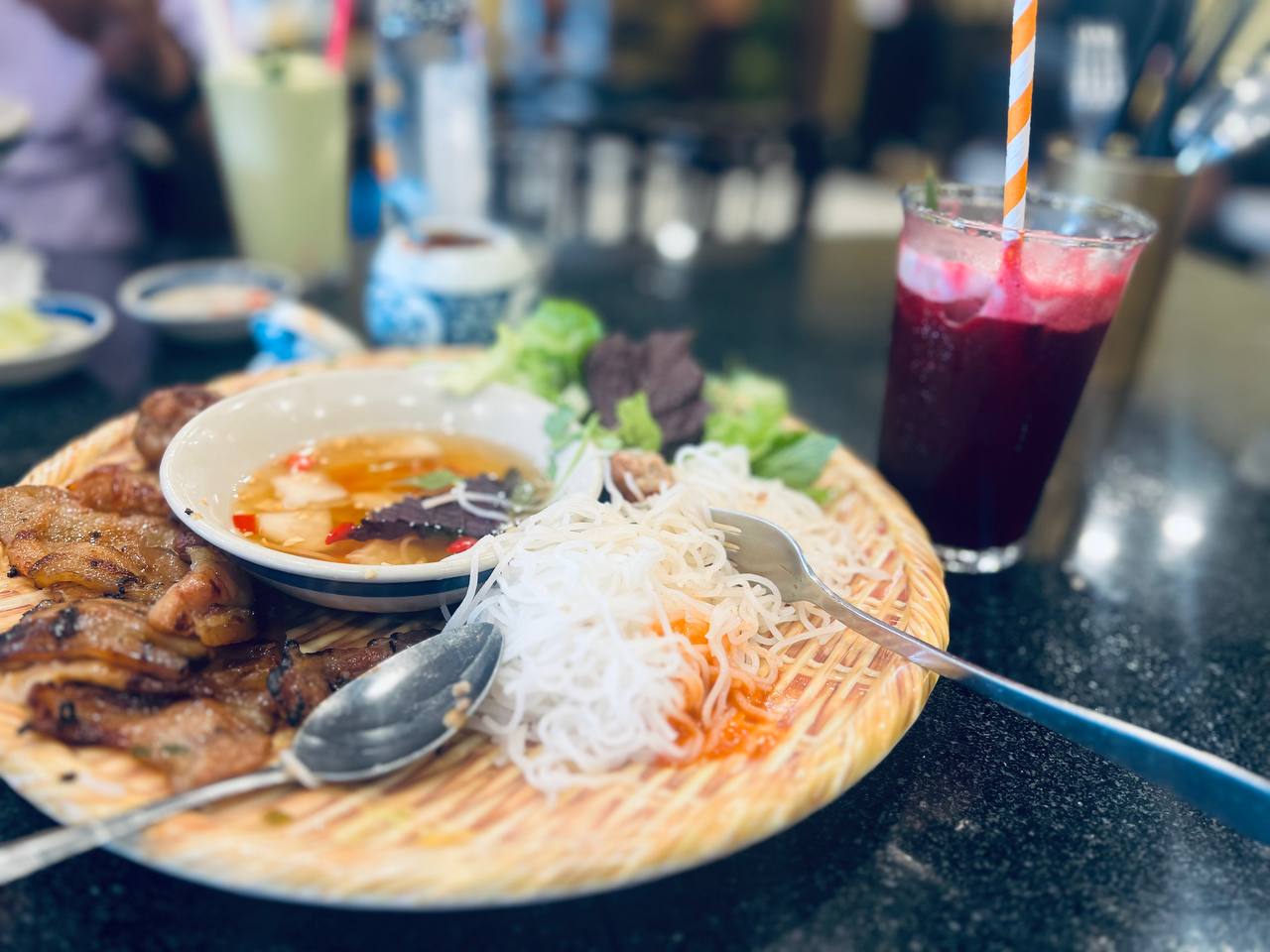
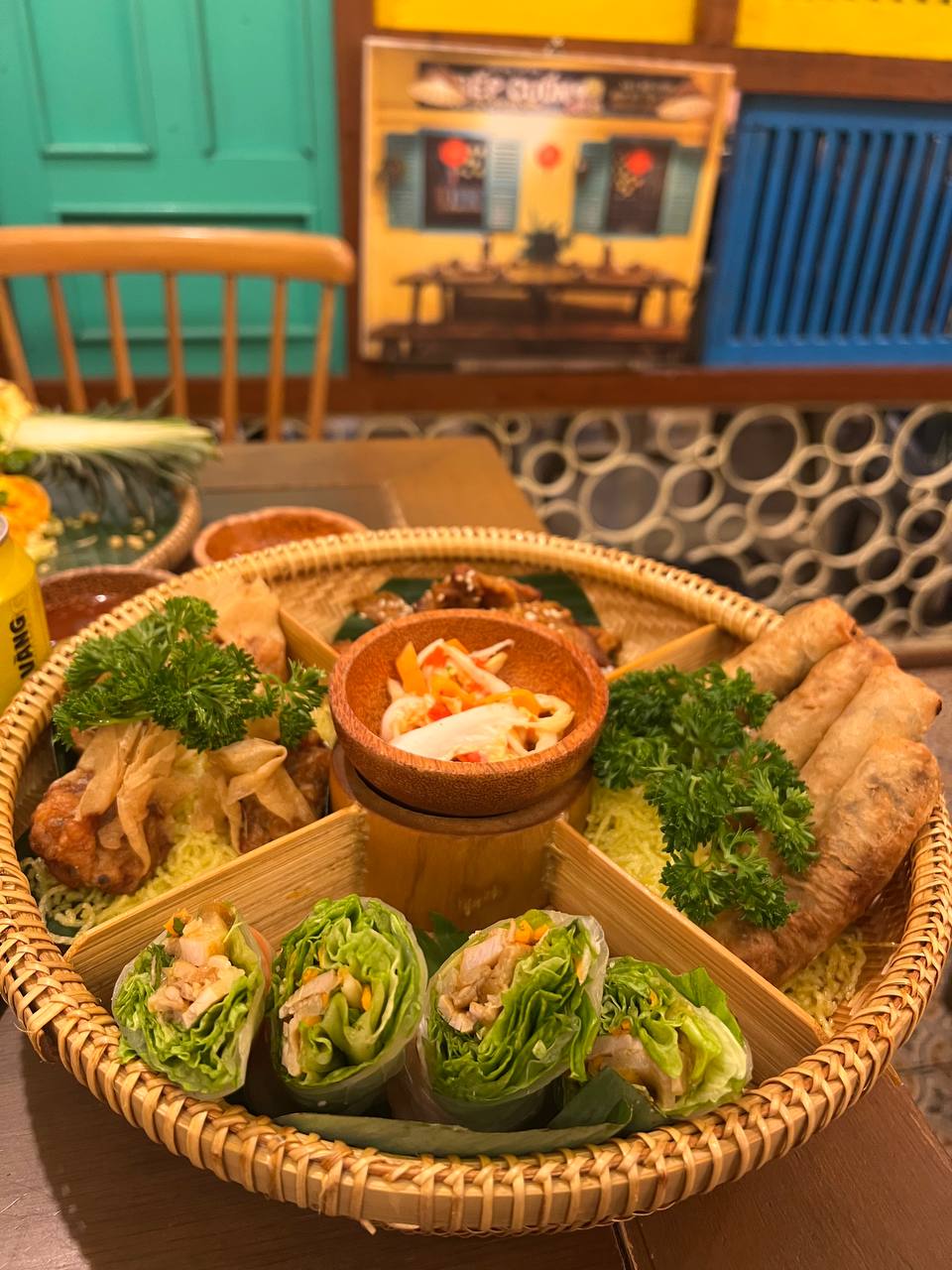
Da Nang also has a Bếp Cuốn outpost. We stopped there before heading up to the hills and were glad we did. A different menu from the Hanoi location but the same Michelin Selected standard. The food platter with spring rolls and fried items is a good way to ease into the region's flavours before the heavier meals ahead.
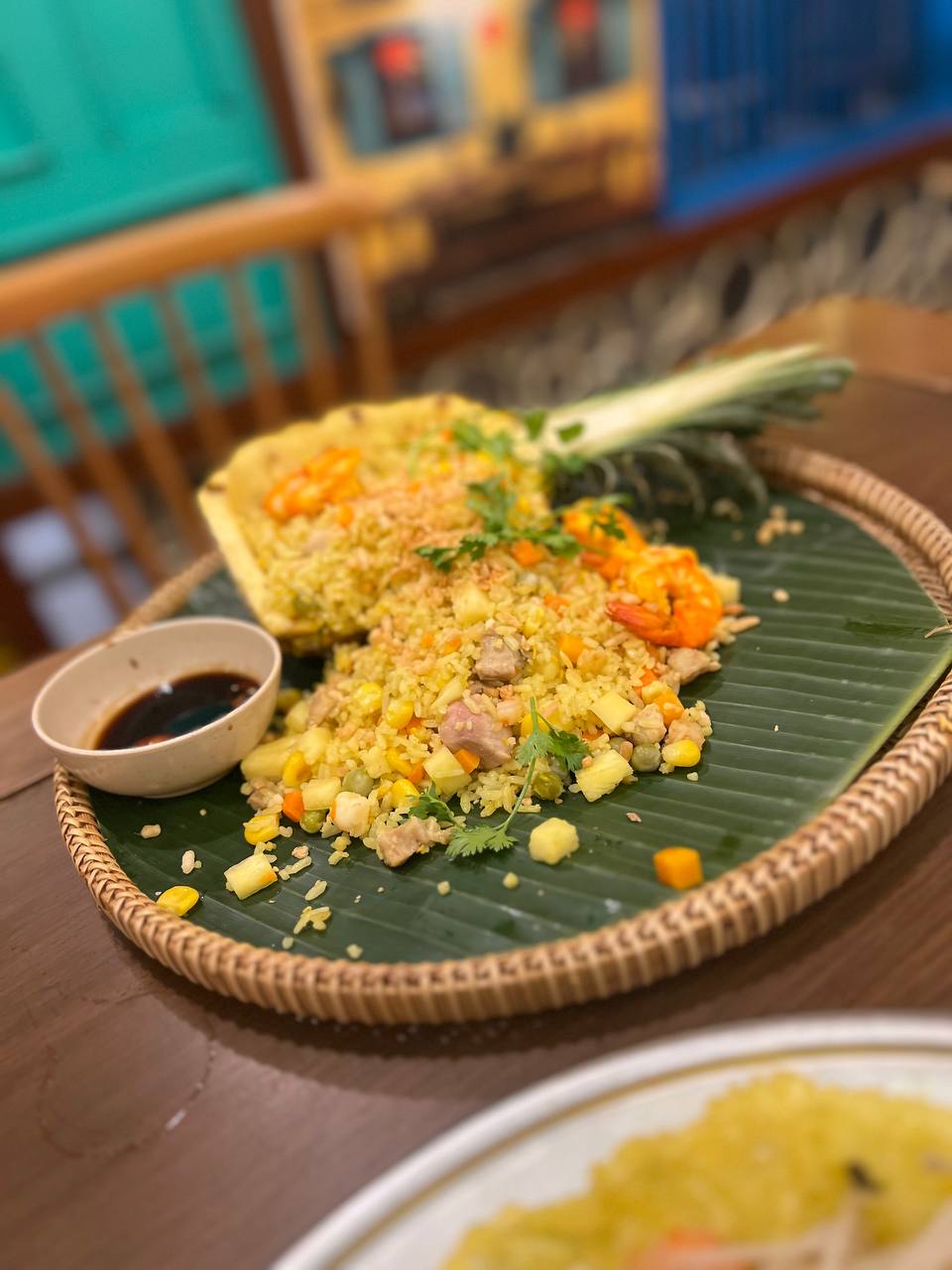
Hoi An: Lanterns, Leather, and Excellent Food
The first thing to do when you arrive in Da Nang is go directly to Hoi An and order custom leather slippers. The shops in the old town take one to two days to make them. If you order on arrival and come back after Ba Na Hills, they're ready when you leave. If you leave it to your last day, you leave without them.
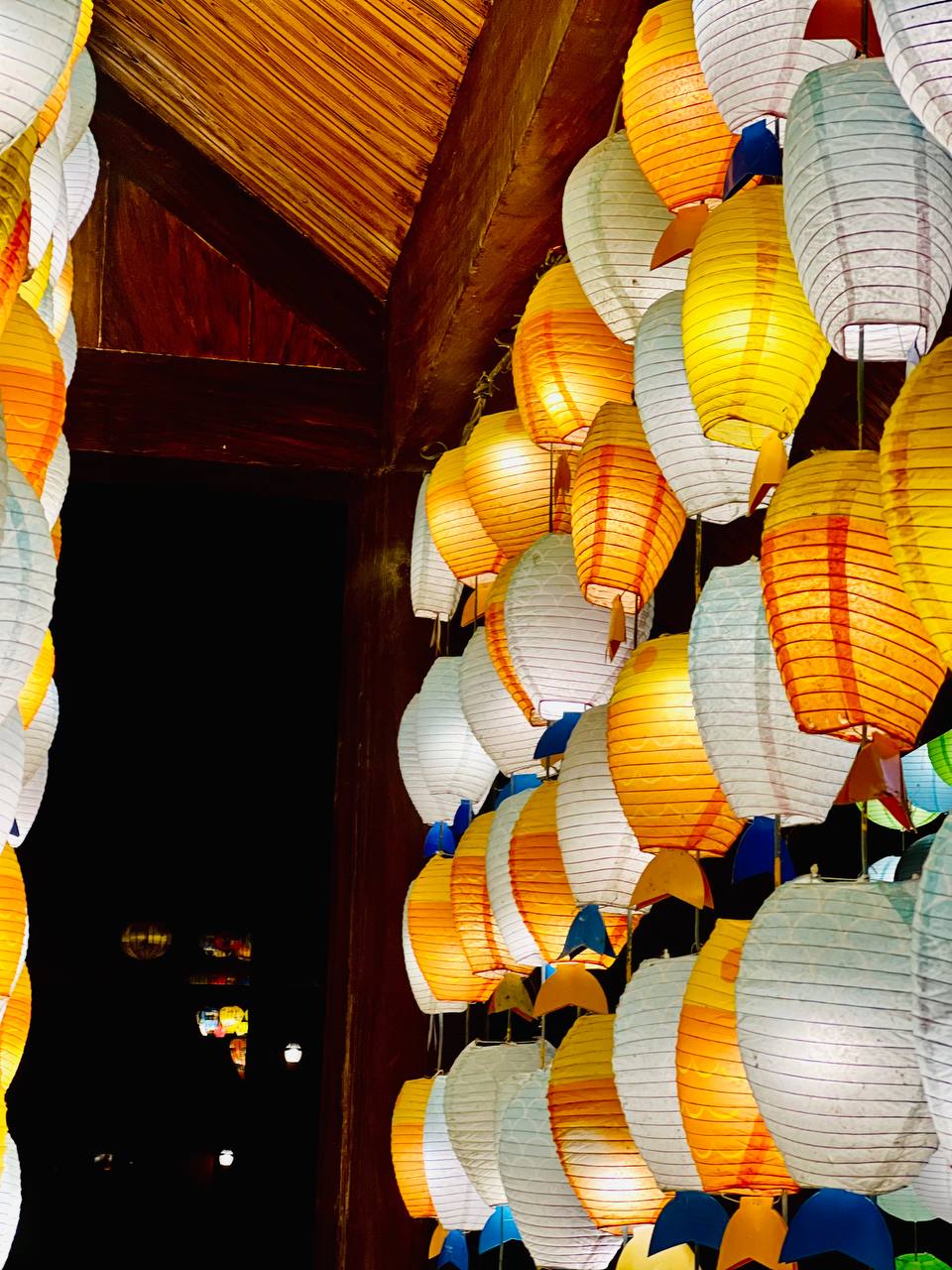
The old town itself is lanterns and yellow walls and river views, genuinely as photogenic as it looks. The evening light through the silk lanterns is something.
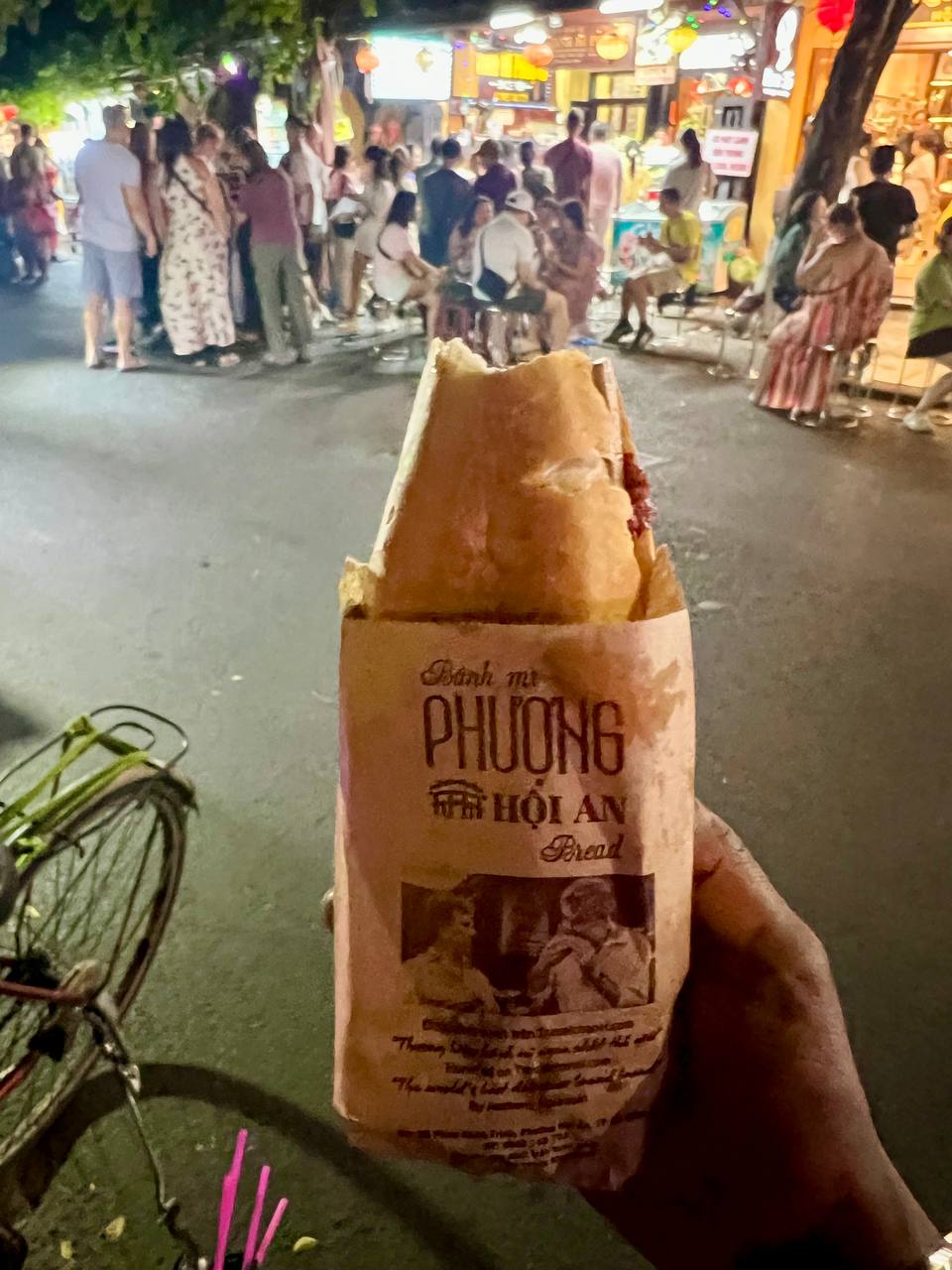
Bánh Mì Phương is the banh mi in Hoi An, the one featured on Anthony Bourdain's show and the queue has never really gone away since. The wrapper announces itself with pride. What's inside is different from the Hanoi versions: more filling, more sauce, the baguette a little softer. It's a street eat, meant to be eaten walking through the old town at night while people watch from every direction.
The food in Hoi An is different in character from Hanoi, more central Vietnamese, more textured. Cao Lầu is a Hoi An-only dish you have to eat here since the noodles are made with water from local wells: thick, slightly chewy, with pork and crispy croutons on top. Mì Quảng 1A is the other stop worth making: turmeric-yellow noodles in a shallow, almost sauce-like broth, topped with shrimp, pork, peanuts and rice crackers. Both dishes are on the Michelin list and both taste like they belong specifically to this place and nowhere else.
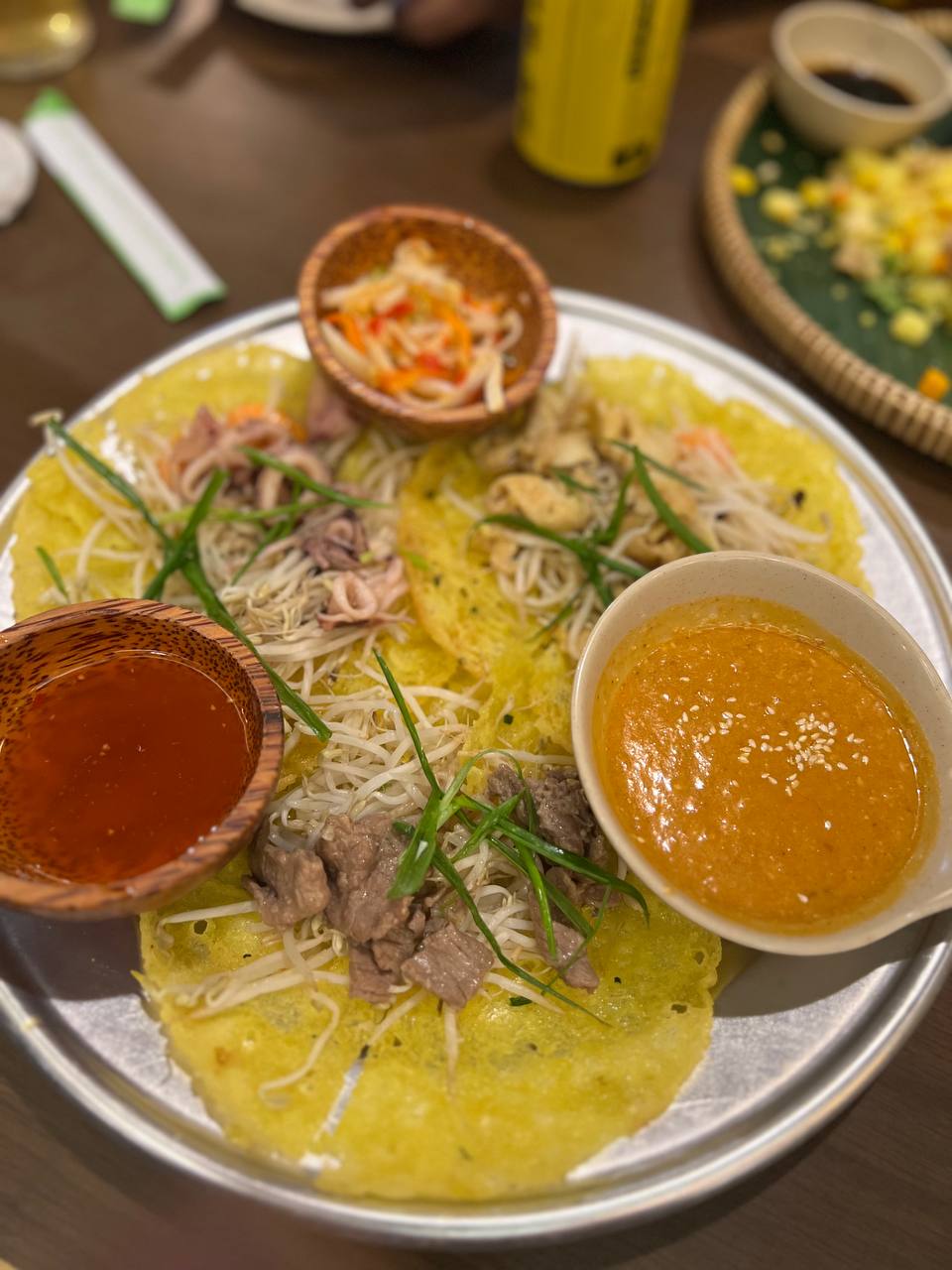
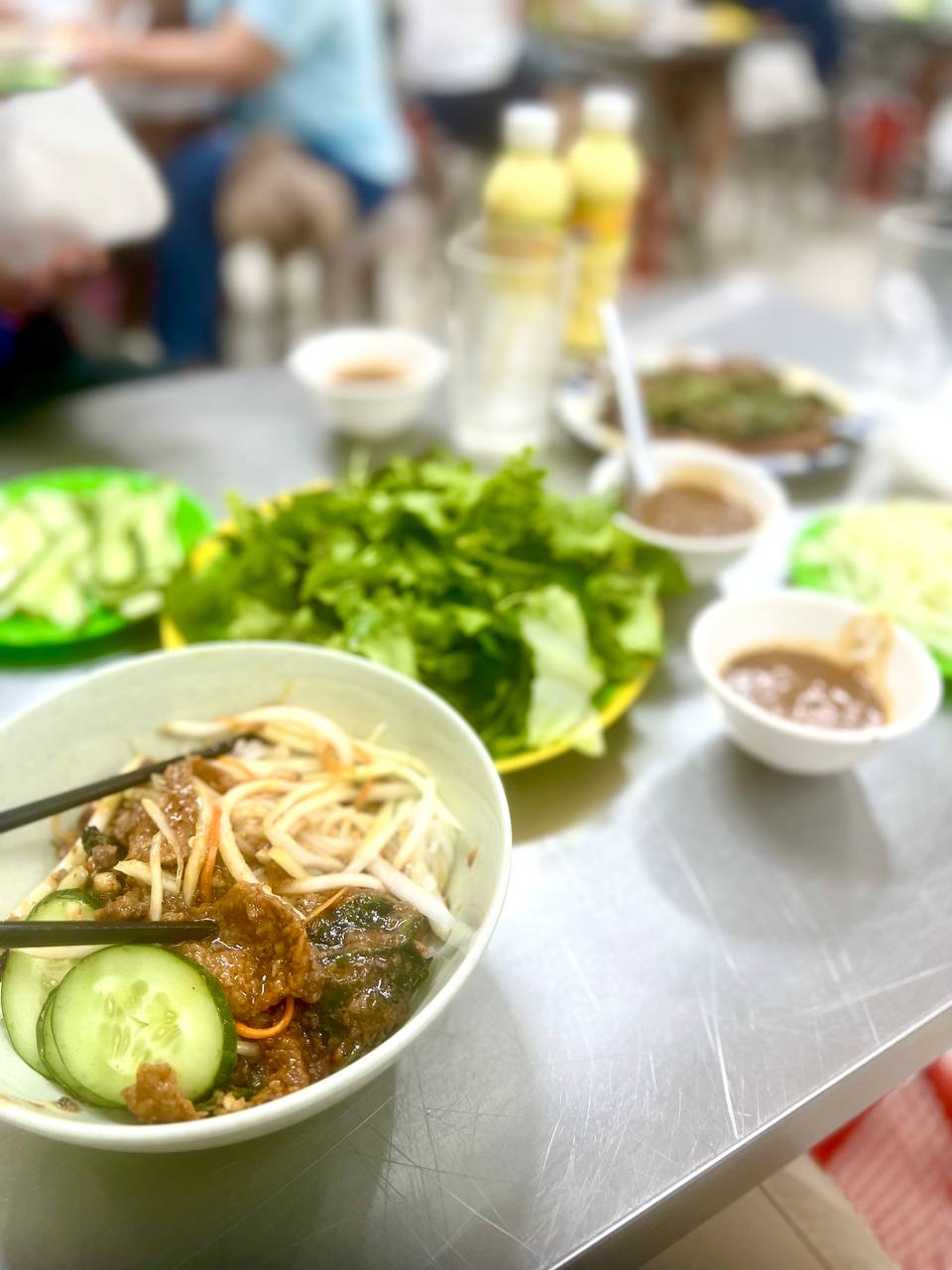
Bánh Xèo Bà Dưỡng is the place for bánh xèo, a turmeric and rice flour pancake filled with pork and prawns that comes out of the pan enormous and still crackling, meant to be broken apart and wrapped in fresh greens. The restaurant also does a noodle bowl with braised pork that's quieter in flavour but precise in a way that good casual cooking always is.
Ho Chi Minh City: Louder, Faster, Still Worth It
Saigon is a different Vietnam from Hanoi. Faster, more Chinese-influenced, bigger everything. The Novotel is in the centre and covered by points, which helped since HCMC hotels aren't cheap.
One honest warning about the airport: Tan Son Nhat international departures is one of the most packed terminals we moved through. Budget real extra time. The queues for check-in and immigration don't move quickly.
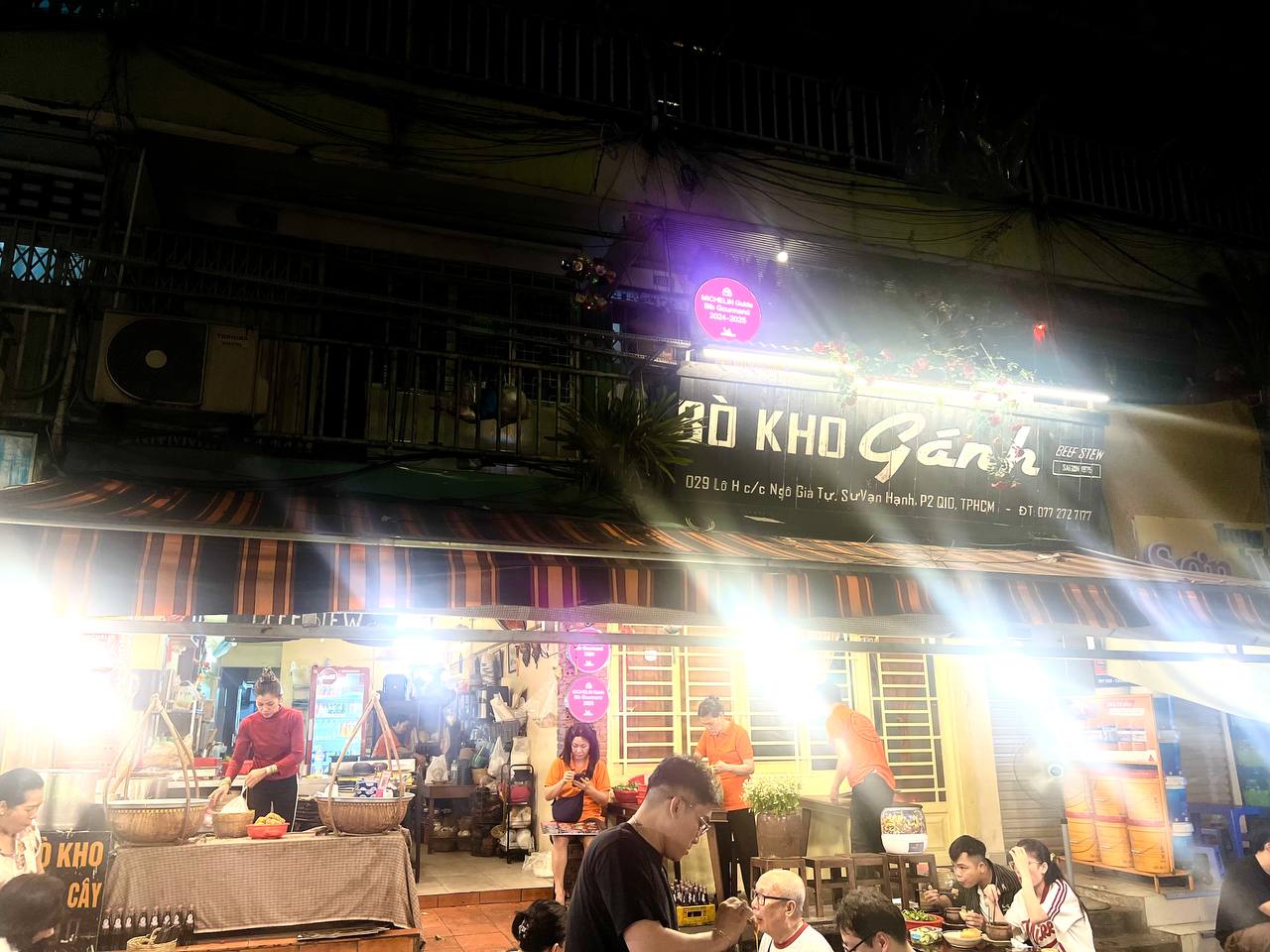
Bò Kho Gánh Sài Gòn is the morning restaurant. Slow-braised beef in a spiced tomato broth, ladled over bread or thick noodles depending on what you're in the mood for. The restaurant is an open-air space on the footpath, busy before 8am, and it's been doing this since 1975. The beef is soft enough to fall apart and the broth has the kind of depth that only comes from a pot that never really goes cold.
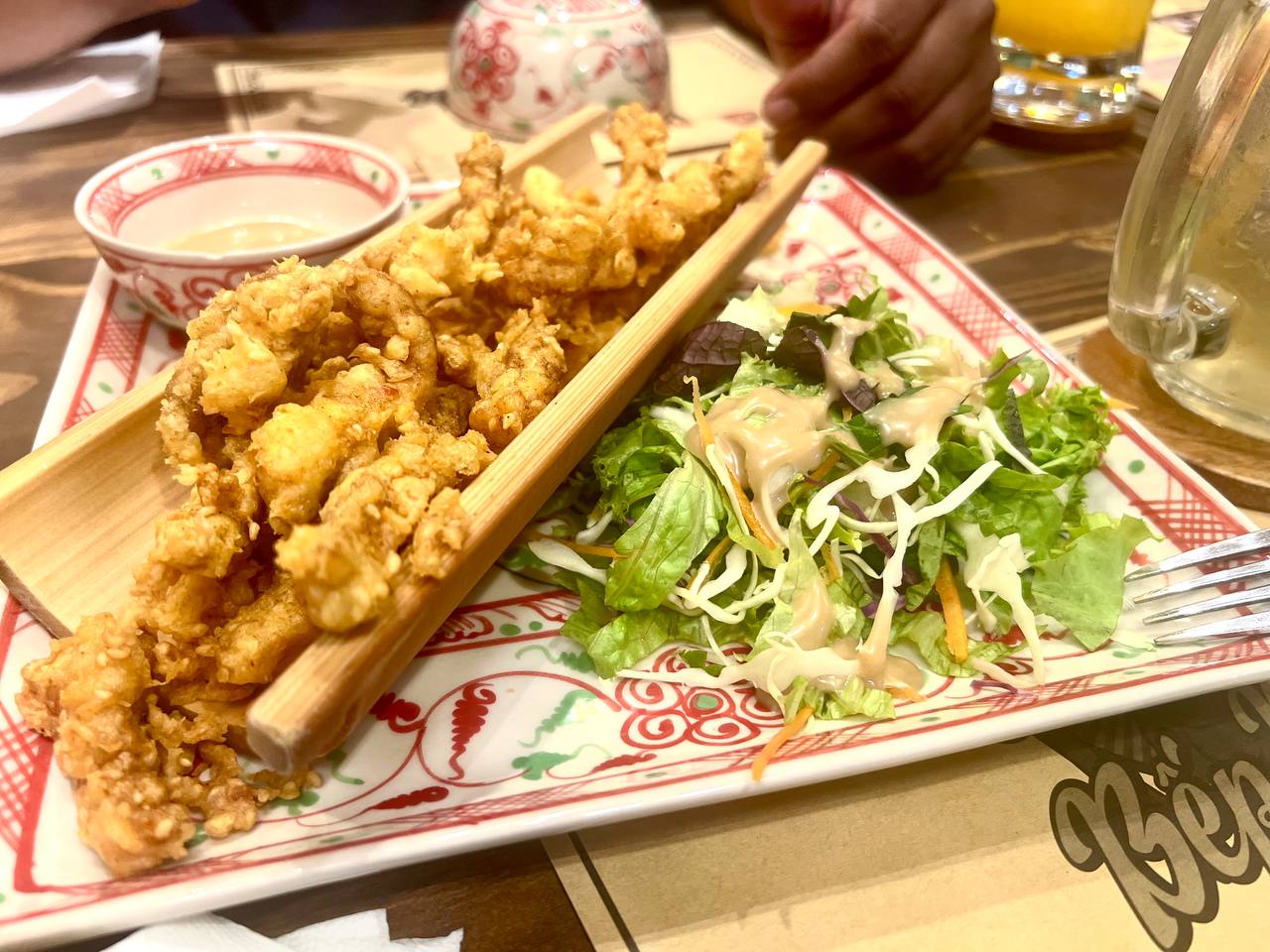
Bep Me In is home-style Southern Vietnamese, the kind of cooking that doesn't try to impress you with presentation, just with flavour. The fried dishes come crispy and well-seasoned, the menu rotates around what's fresh. It's unpretentious in exactly the right way and it's on the Michelin list for the same reason every neighbourhood grandmother's cooking is good: no shortcuts.
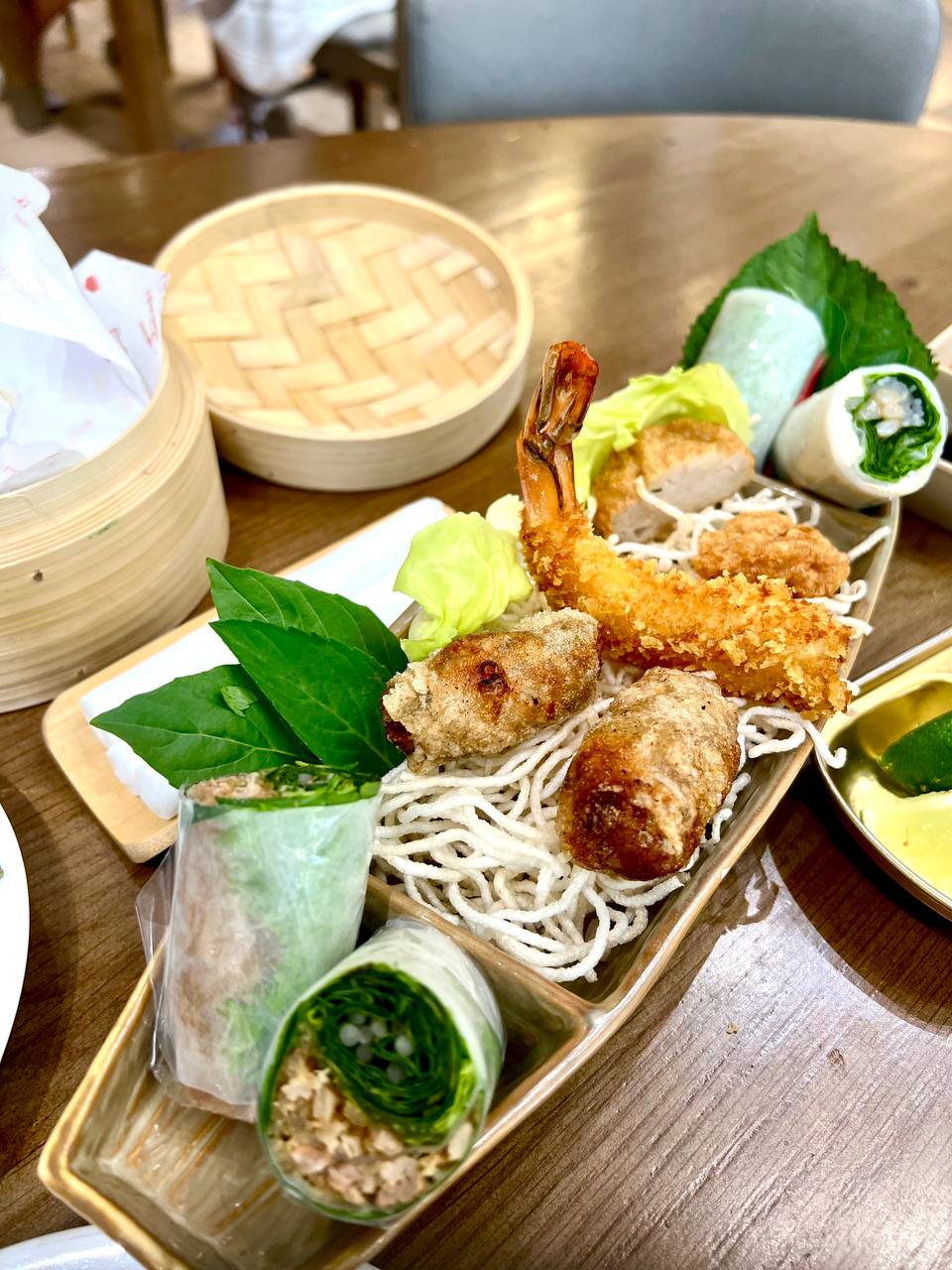
Hủ Tiếu Hồng Phát is pork noodle soup in the Teochew style, thinner than pho, clearer, with a delicacy that makes it the right call on the days you've already eaten too much. The broth is built on pork bone and dried seafood in a way that reads as light but isn't simple. They also do steamed buns and a mixed platter of fresh and fried rolls that are worth ordering alongside.
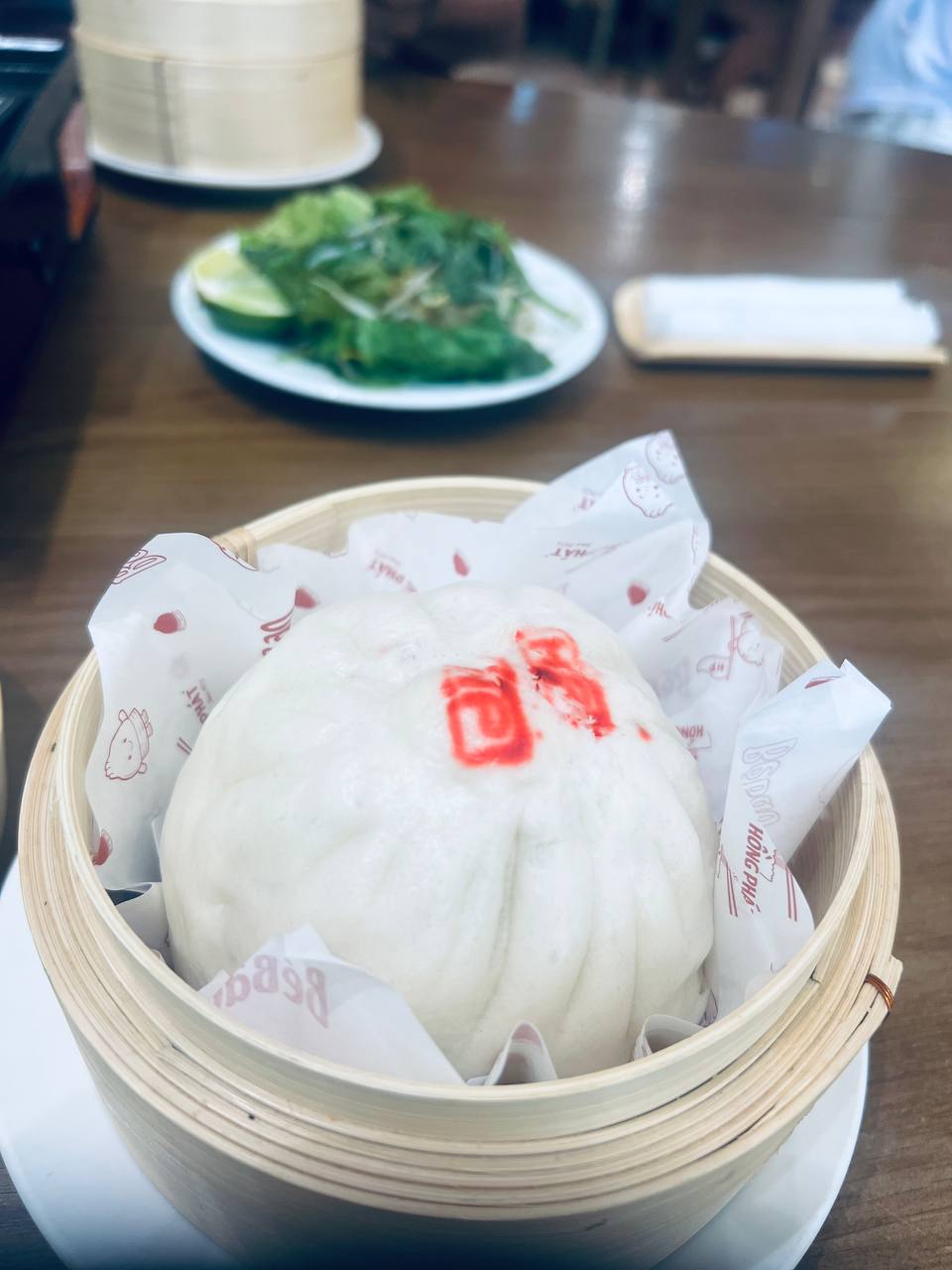
Hoa Túc is where you go when you've had enough of the loud and the crowded. A French-colonial courtyard converted into a restaurant: shaded tables, unhurried service, and a menu of refined Vietnamese dishes that feel like a different register from the street food you've been eating all week. Worth booking ahead.
Sapa: Go, Take a Cab
After HCMC we flew back to Hanoi and drove straight to Sapa. Five hours each way, not a quick hop, but it was right. Sapa sits at 1,500 metres in the northern mountains, rice terraces dropping away from both sides of the road as you come in.
We went up Fansipan by cable car. At 3,143 metres it's the highest point in Indochina. When we went it was cold and foggy at the top, Buddhist shrines disappearing in and out of the mist. On a clear day you can reportedly see into China.
The town itself is quieter than the main tourist sites. Pavi Cafe, which was near where we stayed, was the kind of place that makes you wish you had more time: good coffee, mountain views, a wooden bench outside that nobody seems to be in a hurry to leave.
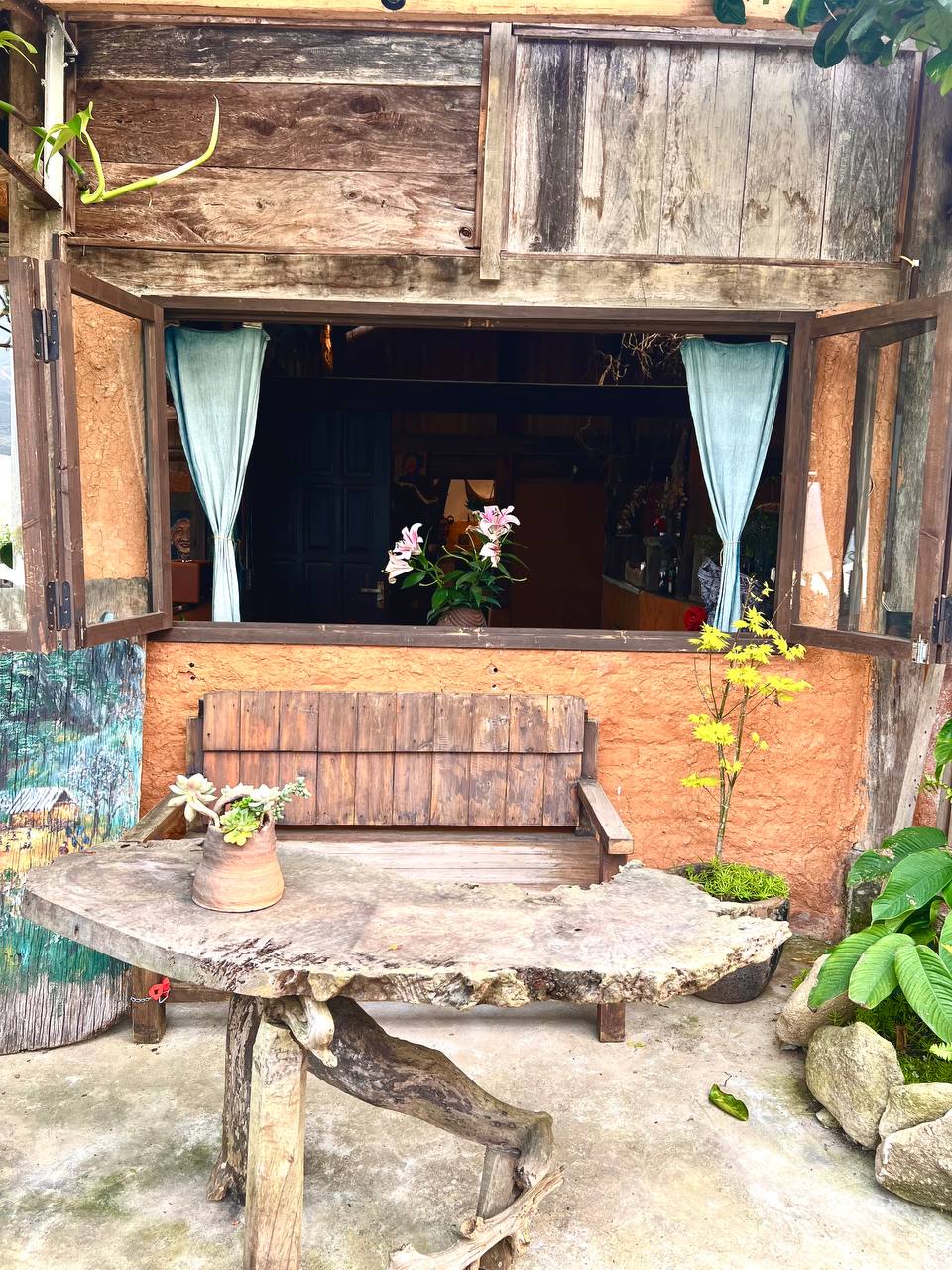
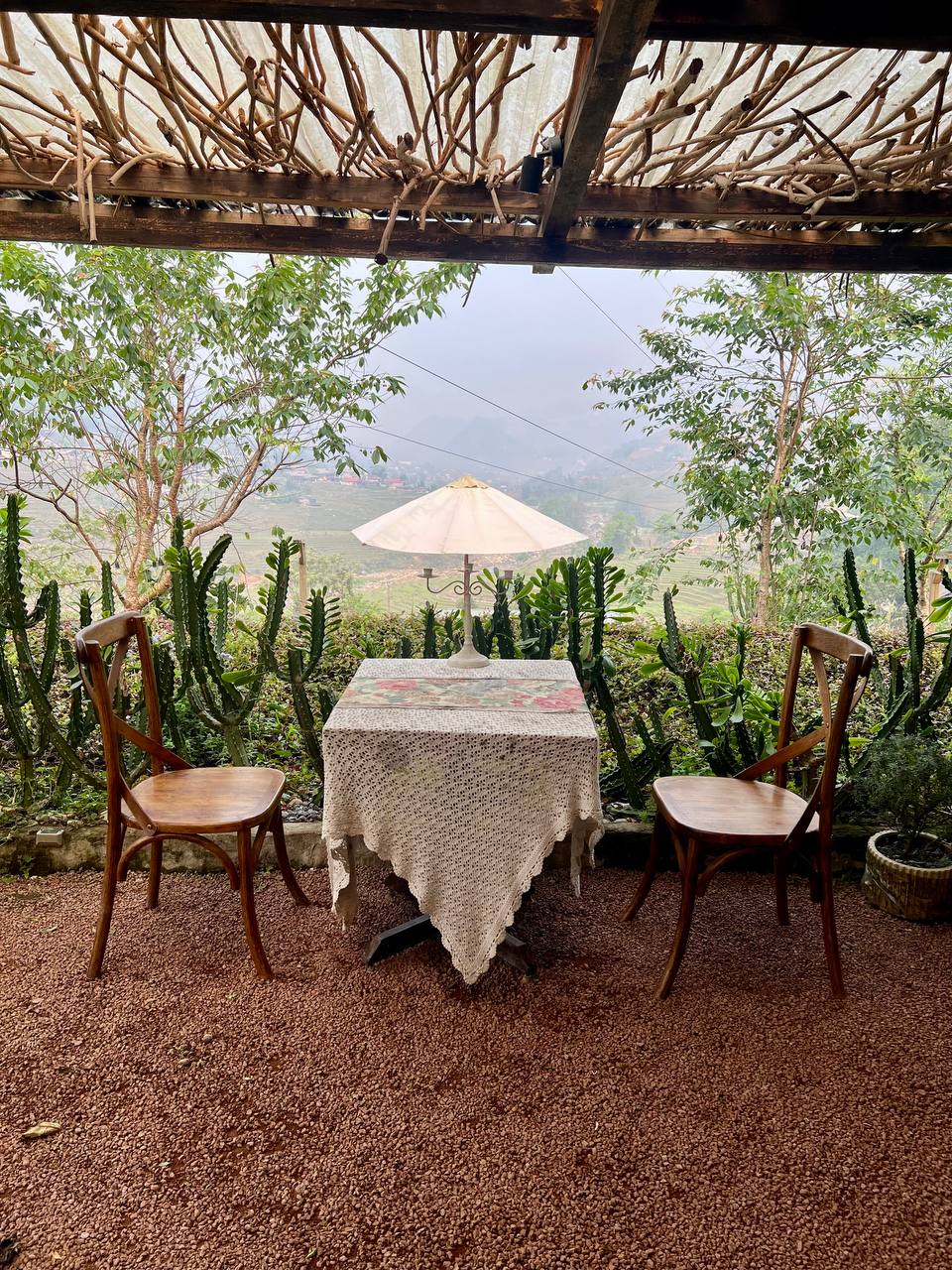
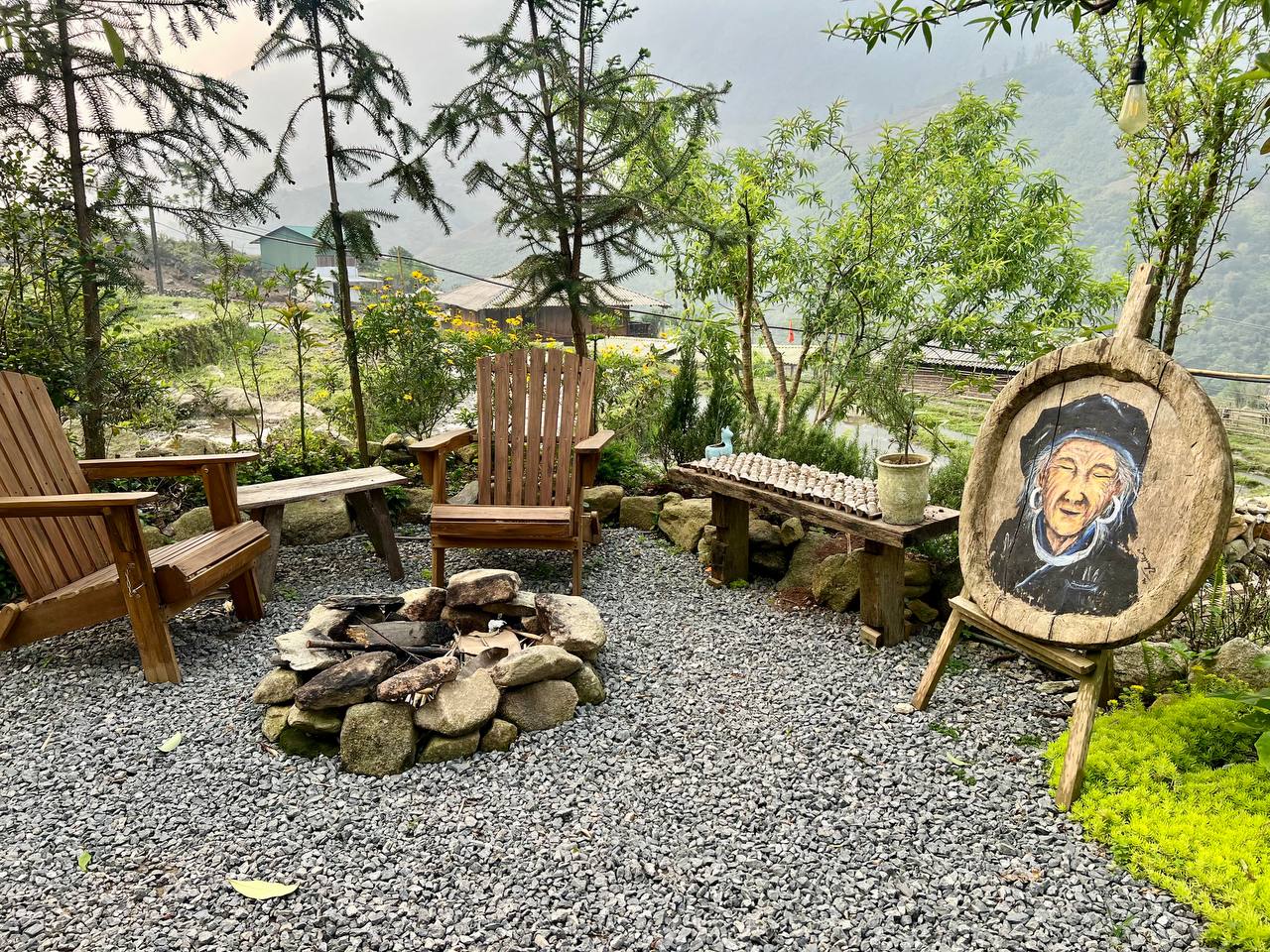
If you're routing through Hanoi and have a spare day and a half, the Sapa cab is the right call.
On the Hanoi Airport Fast Track
We booked fast track immigration at Noi Bai through Klook for both arrival and departure. For departure it's worth it: if you have a tight connection or just want to clear quickly, paying to skip the queue makes sense. For arrival, honestly, skip it. The regular immigration queue at Noi Bai moves at a reasonable pace and you can plan for the time. Save the money.
The Michelin Ten
| Restaurant | City | What to Order |
|---|---|---|
| Pho 10 Ly Quoc Su | Hanoi | Beef pho |
| Cha Ca Thang Long | Hanoi | Turmeric fish with dill |
| Bep Cuon | Hanoi | Fresh rice paper rolls |
| Bánh Xèo Bà Dưỡng | Da Nang / Hoi An | Crispy Vietnamese pancake |
| Ngoc Chi | Ba Na Hills | Iced coconut drink |
| Mì Quảng 1A | Hoi An | Turmeric noodles |
| Hủ Tiếu Hồng Phát | Ho Chi Minh City | Pork noodle soup |
| Bep Me In | Ho Chi Minh City | Home-style Southern Vietnamese |
| Bò Kho Gánh Sài Gòn | Ho Chi Minh City | Braised beef stew with bread |
| Hoa Túc Saigon | Ho Chi Minh City | Refined Vietnamese, courtyard setting |
Ten days. North to south and back north again. If you're doing Vietnam for the first time, this is the route. Go.